
I'll be honest — I've watched hundreds of personal care products come and go. Charcoal masks, jelly cleansers, that weird collagen-jelly phase in 2018. But the humble bath bomb? It's still on my shelf. And on my recommendation list for both my retail friends and my private-label clients.
Let me tell you why this little fizzing sphere has outlasted dozens of "It" products — and what most people (even some big brands) still get wrong about it.
What Exactly Is a Bath Bomb?
At its core, it's baking soda + citric acid + a binder, plus whatever the formulator decides to layer in. That reaction you see? Just CO₂ escaping. Simple chemistry.
But here's the thing — a $2 bomb and a $20 bomb can look identical in the package. The difference lives in the carrier oils, the grade of citric acid (yes, grade matters), and whether the formulator actually balanced pH or just dumped in colorant and called it a day.
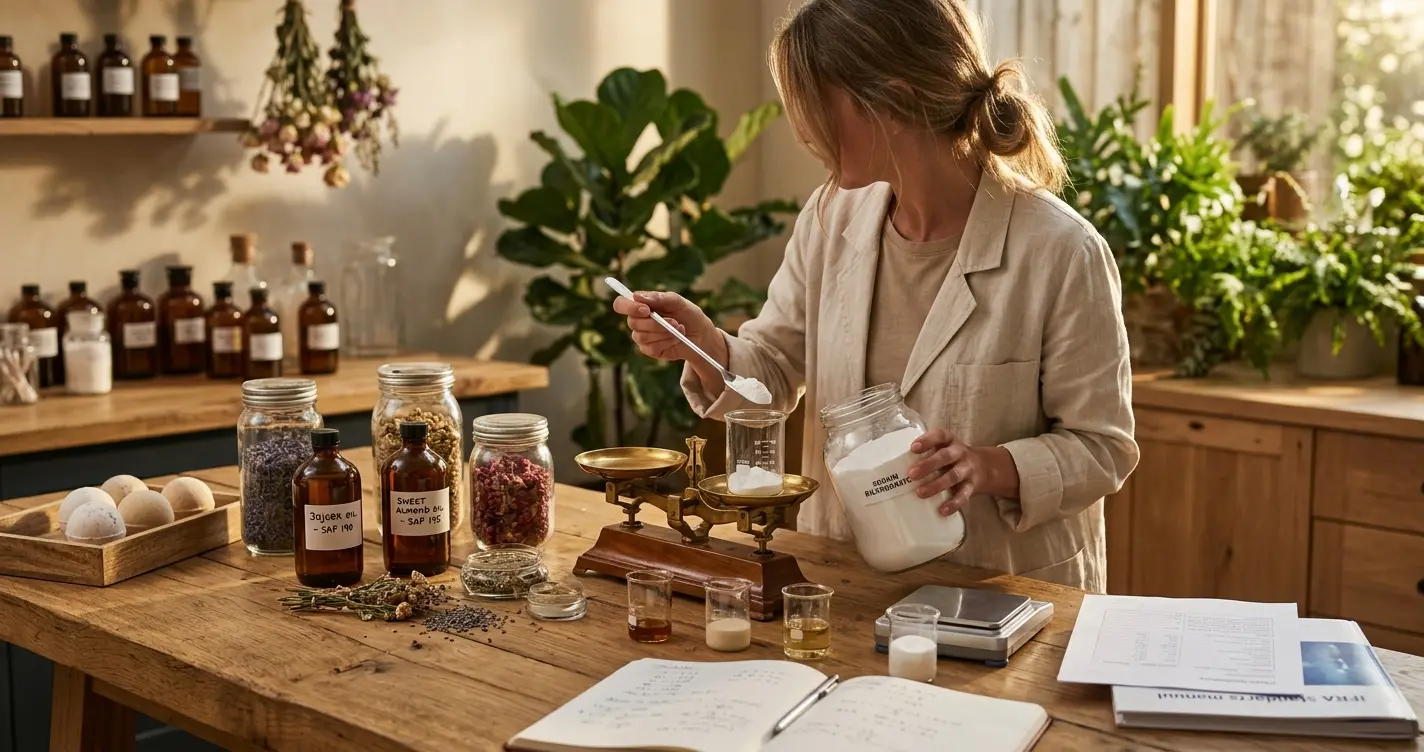
Behind every great bath bomb is a great formulator—and as a supplier myself, I know firsthand that behind every great formulator is a relentless obsession with raw material specs. Is your sodium bicarbonate USP-grade? What's the SAP value of your carrier oil? Do your fragrances comply with IFRA Category 9 limits? These aren't trick questions; they're the baseline questions I field every day, and the ones any serious supplier should be able to answer without hesitation.
5 Benefits I Actually Stand Behind
1. Skin moisturizing properties without the greasy film. A well-built bomb releases shea butter, cocoa butter, or sweet almond oil into the water — your skin pulls what it needs. The trick is pH. Get it wrong and you strip the barrier.
2. Aromatherapy benefits you can feel. Real essential oils — lavender, bergamot, eucalyptus — interact with your limbic system. Fragrance oils smell nice but don't carry the same therapeutic punch. I tell clients: if budget allows, go EO. If not, be transparent on the label.
3. A relaxing bath soak that actually resets you. I follow the 20-minute rule. Any longer and you're just pruning. Add magnesium salts and your sore shoulders will thank you.
4. Natural ingredients suited for sensitive skin. I personally avoid synthetic dyes, SLS, and anything with "parfum" listed without disclosure. Read the INCI — the first five ingredients tell you everything.
5. Real ROI on self-care. A quality bomb runs $4–8. A spa soak is $80. The math sells itself, which is why retailers see strong repeat rates.
Quick-Reference Table
| Benefit | Hero Ingredient | Skin Type Fit | Best Time |
|---|---|---|---|
| Deep moisture | Shea butter | Dry, mature | Evening |
| Calm & sleep | Lavender EO | All | Night |
| Muscle recovery | Magnesium salts | Post-workout | Evening |
| Sensitive skin | Colloidal oat | Reactive, eczema-prone | Anytime |
| Morning energy | Peppermint + citrus EO | Normal | AM |
How to Use One Properly
Water around 37–39°C. Cleanse first, then soak — never the other way around. And please, store unused bombs in an airtight container. Humidity kills the fizz faster than you'd believe.
Final Thoughts
Twenty years in, I've learned this: "simple" products are the hardest to perfect. The bath bomb looks basic, but every detail — ingredient grade, ratio, cure time — shows up in the user's experience.
Looking to develop or source a bath bomb line that actually performs? Let's talk formulation. Reach out for samples, custom blends, or a private-label consultation — I'd rather build something worth repurchasing than chase the next trend.
FAQ
Q: Are bath bombs safe for daily use?
A: For most skin types, 3–4 times a week is fine. Daily can over-soften the barrier if oils are heavy.
Q: Can I use one with eczema or sensitive skin?
A: Yes, but stick to fragrance-free, dye-free formulas with colloidal oat or ceramides.
Q: Do essential oils really do anything?
A: At proper dilution — yes. Below 0.5%, you're mostly smelling, not benefiting.
Q: Will it stain my tub or skin?
A: A well-formulated one won't. Cheap synthetic dyes are usually the culprit.
Q: What's the shelf life?
A: Around 6 months sealed. After that, the fizz fades and oils can oxidize.
Q: Safe during pregnancy?
A: Skip clary sage, rosemary, and jasmine EOs. Lavender and chamomile are generally considered safer — but always check with your OB.