
We've all been there. You're sinking into a warm bath, watching a colorful bath bomb dissolve into something that looks like a galaxy, and your dog is sitting right there on the bath mat, staring at you. Maybe wagging. Maybe trying to drink the water. And you think — wouldn't it be fun to give them this experience too?
This article breaks down exactly why, what the real risks are, and what you can do instead to make bath time something your dog actually enjoys — without a trip to the emergency vet.
What's Actually Inside a Bath Bomb?
Common Ingredients in Human Bath Bombs
Bath bombs look simple enough. A fizzy ball that smells nice. But the ingredient list tells a different story. Most contain:
- Baking soda and citric acid — that's what creates the fizz
- Fragrance oils or essential oils for scent
- Artificial dyes and colorants
- Glitter, dried flowers, or other decorative bits
- Moisturizing agents like cocoa butter or coconut oil
For humans, this combination is generally fine. Our skin handles it. We don't drink the bathwater (hopefully). But dogs are a completely different situation.
Why These Ingredients Matter for Dogs
Three things make dogs uniquely vulnerable here. First, their skin is thinner than ours and has a different pH balance — around 6.2 to 7.4 compared to our 5.5. Products formulated for human skin can disrupt their skin barrier fast.
Second, dogs lick themselves. After a bath, they're going to groom. Whatever residue is on their fur ends up in their mouth. That's not a maybe — it's a guarantee.
Third, body weight matters for toxicity. A 15-pound dog ingesting the same amount of a chemical as a 150-pound human is getting ten times the relative dose. The math isn't in their favor.
The Real Dangers: Why Human Bath Bombs Can Harm Your Dog
Essential Oils Toxic to Dogs
This is the big one. Many essential oils that smell wonderful to us are genuinely dangerous for dogs. Tea tree oil is probably the worst offender — it can cause tremors, weakness, and even liver damage. But it's far from alone.
Eucalyptus, peppermint, cinnamon, and even lavender in concentrated forms can all cause problems. Symptoms of essential oil poisoning include drooling, vomiting, wobbliness, lethargy, and in serious cases, difficulty breathing.
And here's what catches people off guard: dogs don't need to swallow these oils for harm to occur. Absorption through the skin is a real pathway to toxicity, especially when the skin is warm and pores are open — exactly the conditions during a bath.
Artificial Dyes and Fragrances
Those gorgeous colors that make bath bombs so appealing on Instagram? They can cause skin irritation, allergic reactions, and persistent itchiness in dogs. Some breeds — bulldogs, retrievers, terriers — are especially prone to chemical sensitivities.
Beyond irritation, artificial dyes can stain light-colored fur. That's cosmetic, sure, but the itching and scratching that follows contact with synthetic fragrances is anything but trivial. A dog scratching itself raw from a reaction is a miserable sight.
The Fizzing Action Itself
Even setting chemistry aside, the fizzing itself can be problematic. Anxious dogs — and there are a lot of them — may panic at the bubbling and hissing. A scared, wet dog in a bathtub is a recipe for injury to both of you.
Then there's the residue issue. Bath bombs leave a film on everything they touch. On human skin, we towel off and move on. But dogs have dense fur that traps residue close to the skin, and unless you rinse extremely thoroughly, that stuff sits there irritating them for hours.
Oh, and if your dog drinks the bathwater — which many dogs absolutely will try to do — they're ingesting a concentrated cocktail of everything listed above.
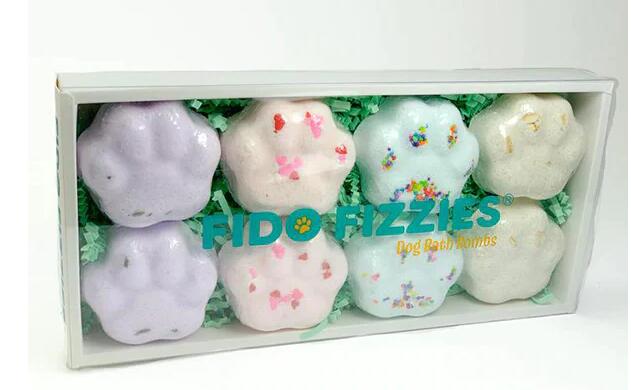
Are "Pet-Safe Bath Bombs" Actually Safe?
What to Look For on Labels
The pet product market has noticed that owners want to pamper their dogs, and pet-safe bath bombs now exist. Some are genuinely well-formulated. Others are just marketing.
Look for products that are veterinarian-formulated (not just "vet-recommended," which can mean almost nothing). The ingredient list should be short and recognizable. It should be free from essential oils, artificial dyes, and synthetic fragrances. If you can't understand what's in it, your dog probably shouldn't be soaking in it.
Dog-Friendly Bath Products Worth Considering
If you want to elevate bath time without the risk, there are solid options that actually benefit your dog's skin:
- Oatmeal-based bath soaks — soothing, anti-inflammatory, and safe if licked
- Coconut oil rinses — moisturizing and gentle
- Unscented, hypoallergenic shampoos designed for canine pH levels
- Plain baking soda as a deodorizer — just a light sprinkle, then rinse
These won't give you the Instagram-worthy fizz and color explosion, but they'll leave your dog clean, comfortable, and not itching at 3 AM.
Red Flags in "Pet" Marketing
Be skeptical. The word "natural" on a pet product label means essentially nothing — there's no regulatory standard behind it. I've seen dog-friendly bath products that still list tea tree oil or lavender oil in their ingredients. Natural doesn't mean safe.
There's also no specific regulatory body overseeing pet bath products the way the FDA oversees human cosmetics. That means the burden of checking ingredients falls entirely on you.
Natural Dog Bath Alternatives That Actually Work
Simple DIY Options
You don't need to buy anything fancy. Some of the best natural dog bath alternatives are already in your kitchen:
Oatmeal soak: Grind plain oatmeal into a fine powder, dissolve it in warm water, and let your dog soak for 10 minutes. This is genuinely therapeutic for itchy or irritated skin.
Diluted apple cider vinegar rinse: One part ACV to four parts water, applied after shampooing. Helps with itchiness and restores skin pH. Avoid if your dog has any open scratches — it'll sting.
Coconut oil massage: After the bath, work a small amount of virgin coconut oil into their coat. Moisturizes skin and adds a nice sheen to fur.
Baking soda sprinkle: For between-bath freshening, a light dusting of baking soda rubbed into dry fur and brushed out absorbs odor without any chemicals.
Bathing Dogs Safely: Best Practices
Whatever products you use, technique matters. Keep water lukewarm — not hot. Dogs overheat more easily than we do, and hot water strips natural oils from their coat.
How often should you bathe? It depends on breed and lifestyle. Most dogs do fine with a bath every 4 to 6 weeks. Over-bathing causes dry, flaky skin regardless of what products you use.
Rinse longer than you think you need to. Then rinse again. Product residue is the number one cause of post-bath itching, and it's completely preventable.
For drying, pat rather than rub. Vigorous toweling can irritate skin and tangle fur. If you use a blow dryer, keep it on the lowest heat setting and maintain distance.
What to Do If Your Dog Was Exposed to a Bath Bomb
Immediate Steps
Accidents happen. Maybe your dog jumped into your bath, or someone in the household didn't know better. Don't panic, but act quickly.
Rinse your dog thoroughly with plain warm water. Get all the residue off their skin and out of their fur. This alone can prevent most reactions if you catch it early.
Then watch. Look for redness, excessive scratching, swelling, or behavioral changes. If they drank the water, watch for vomiting, drooling, diarrhea, or lethargy over the next few hours.
When to Call the Vet
Call your vet or the ASPCA Animal Poison Control Center (888-426-4435) if you notice tremors, difficulty breathing, persistent vomiting, extreme lethargy, or any neurological symptoms like wobbling or disorientation.
When you call, have the bath bomb packaging ready. They'll want to know the specific ingredients, your dog's weight, and approximately how much exposure occurred. This information helps them assess severity fast.
The Bottom Line
Human bath bombs and dogs don't mix. The essential oils are potentially toxic, the dyes cause irritation, the fragrances overwhelm their senses, and the residue ends up ingested no matter how careful you are. It's just not worth the risk for a few minutes of cute photos.
The good news? You have plenty of safe, simple alternatives. An oatmeal soak, a proper dog shampoo, some peanut butter on the wall, and lukewarm water — that's a spa day in dog terms. They don't need the fizz and the colors. They need clean skin, a calm environment, and maybe a treat at the end.
Your dog's version of luxury is a stress-free bath followed by zoomies on a clean towel. And honestly? That's pretty great.
Frequently Asked Questions
Can I use a bath bomb near my dog if they don't get in the water?
It's not ideal. Strong fragrances can irritate a dog's respiratory system — their sense of smell is roughly 40 times more sensitive than ours. There's also the risk of them licking residue off the tub edge or floor. If you want your own bath bomb experience, just keep the bathroom door closed and rinse the tub before your dog has access.
Are there any essential oils that are safe for dogs in baths?
Very few, and only when heavily diluted. Chamomile and cedarwood are sometimes cited as safer options, but "safer" isn't the same as "safe." Always consult your vet before using any essential oil on or near your dog. The concentration matters enormously, and getting it wrong has real consequences.
My dog accidentally ate a piece of bath bomb. What should I do?
Check the ingredient list immediately. A small nibble of a basic bath bomb (baking soda and citric acid) might cause mild stomach upset but probably isn't an emergency. However, if the product contains essential oils, xylitol, or you're unsure of the ingredients, contact your vet or poison control right away. Don't induce vomiting unless specifically instructed to.
How can I make bath time fun for my dog without bath bombs?
Treats are your best friend here. Smear peanut butter on the tub wall for them to lick during the bath. Use lukewarm water, speak calmly, and keep sessions short. A rubber mat on the tub floor prevents slipping, which is a major source of bath anxiety. Positive reinforcement over time turns bath dread into bath tolerance — and sometimes even enthusiasm.
Do pet-safe bath bombs actually fizz like regular ones?
Some do. The fizzing comes from baking soda and citric acid reacting with water, and both of those ingredients are generally safe for dogs in small amounts. The difference is what else is in there. Legitimate pet-safe bath bombs skip the essential oils, synthetic dyes, and fragrances that make human versions problematic. The fizz is gentler, and the experience is more about mild bubbling than a dramatic color show.