

Let's get something straight right away. Epsom salt isn't table salt. It's not something you sprinkle on your eggs or toss into pasta water. Chemically, it's magnesium sulfate — a mineral compound that's been sitting in bathroom cabinets for generations, mostly used for soaking sore muscles after a long day or easing the ache of a bruised ankle.
But somewhere along the way, people started asking a different question: can you actually eat it?
The short answer is yes, technically. But the longer answer matters a whole lot more. The gap between "technically possible" and "actually safe or advisable" is enormous — and frankly, it's a gap that sends people to emergency rooms every year. So let's walk through this carefully.
How Magnesium Sulfate Ingestion Became a Thing
Epsom salt has a surprisingly long history as an oral remedy. Back in the 17th century, residents of Epsom, England stumbled upon mineral-rich springs. Drinking that water became a local health trend — the kind of thing fashionable Londoners would travel hours for. The bitter-tasting compound dissolved in that water was, you guessed it, magnesium sulfate.
Fast forward a few centuries. You'll still find Epsom salt sold in pharmacies with instructions for internal use, specifically as a saline laxative. The FDA has historically recognized certain magnesium sulfate products as over-the-counter laxatives. So the idea of drinking Epsom salt water isn't some fringe internet hack cooked up by a wellness blogger in 2019. It has roots in legitimate, if somewhat old-school, medical practice.
That said, context matters. A lot.
When Epsom Salt Laxative Use Is Considered Acceptable
Some Epsom salt products carry a "USP grade" label, which means they meet United States Pharmacopeia standards for purity and are manufactured with ingestion in mind. If a product has that designation, it's cleared a meaningful quality bar. If it doesn't — if you grabbed a bag from the gardening aisle — put it down. That distinction is not trivial.
Typical Laxative Dosing
Here's what you'd generally see recommended on a USP-grade Epsom salt package:
- Adults and children 12+: 2 to 6 teaspoons dissolved in 8 ounces of water
- Children 6–11: 1 to 2 teaspoons dissolved in 8 ounces of water
- Children under 6: Not recommended without a doctor's direct guidance
The dissolved solution works by drawing water into the intestines through osmosis. That softens stool and stimulates bowel movements. Most people experience results within 30 minutes to 6 hours, depending on dosage and whether they've eaten recently.
The Critical Caveat
This is meant to be occasional, short-term use only. We're talking about a situation where someone is genuinely constipated and needs quick relief — not a daily wellness routine, not a detox protocol, and absolutely not a weight-loss strategy. I really can't stress that enough, because it's exactly the point where most people go wrong.
The Real Risks: Epsom Salt Side Effects You Need to Understand
Here's where things get serious. While a one-time, properly dosed laxative use might be perfectly fine for a healthy adult, the margin for error is thinner than most people realize. And the consequences of getting it wrong aren't just unpleasant — they can be genuinely dangerous.
Magnesium Overdose (Hypermagnesemia)
Your kidneys regulate magnesium levels in the blood. When you dump a large amount of magnesium sulfate into your system orally, you're essentially betting that your kidneys can keep up. For most healthy adults with normal kidney function, they can — barely, and temporarily.
But here's the thing. If your kidney function is even slightly compromised — and plenty of people don't realize theirs is — excess magnesium builds up fast. Symptoms of hypermagnesemia escalate quickly and include:
- Nausea and vomiting
- Facial flushing and a spreading feeling of warmth
- Dangerously low blood pressure
- Slowed heart rate
- Progressive muscle weakness
- In severe cases, respiratory failure and cardiac arrest
This isn't hypothetical. Case reports in medical literature document hospitalizations and deaths linked to oral magnesium sulfate overconsumption. A review published in the Journal of Medical Toxicology highlighted cases where individuals consumed excessive amounts — sometimes as part of so-called "cleanses" — and experienced life-threatening cardiac complications. These were real people who thought they were doing something healthy.
Gastrointestinal Distress
Even at recommended doses, drinking Epsom salt water can cause significant cramping, diarrhea, and bloating. The osmotic effect that makes it work as a laxative is the same mechanism that makes it deeply uncomfortable. Some people describe the experience as violent — hours of urgent, watery diarrhea that leaves them shaky and exhausted. Not exactly the gentle cleanse that wellness influencers promise in their serene bathroom selfies.
Dehydration and Electrolyte Imbalance
Aggressive diarrhea pulls water and electrolytes out of your body rapidly. If you're not actively replenishing both, you risk dehydration — which carries its own cascade of problems. Dizziness, confusion, elevated heart rate, kidney stress, and in extreme cases, organ failure. People who combine Epsom salt ingestion with fasting or restricted fluid intake are playing a particularly risky game.
Drug Interactions
Magnesium sulfate can interact with several common medications, including:
- Blood pressure medications
- Certain antibiotics (tetracyclines, fluoroquinolones)
- Muscle relaxants
- Diabetes medications
If you're taking anything regularly, talking to a pharmacist or doctor before ingesting Epsom salt isn't optional. It's necessary. Drug interactions with magnesium are well-documented, and some of them reduce the effectiveness of medications you might really need working properly.
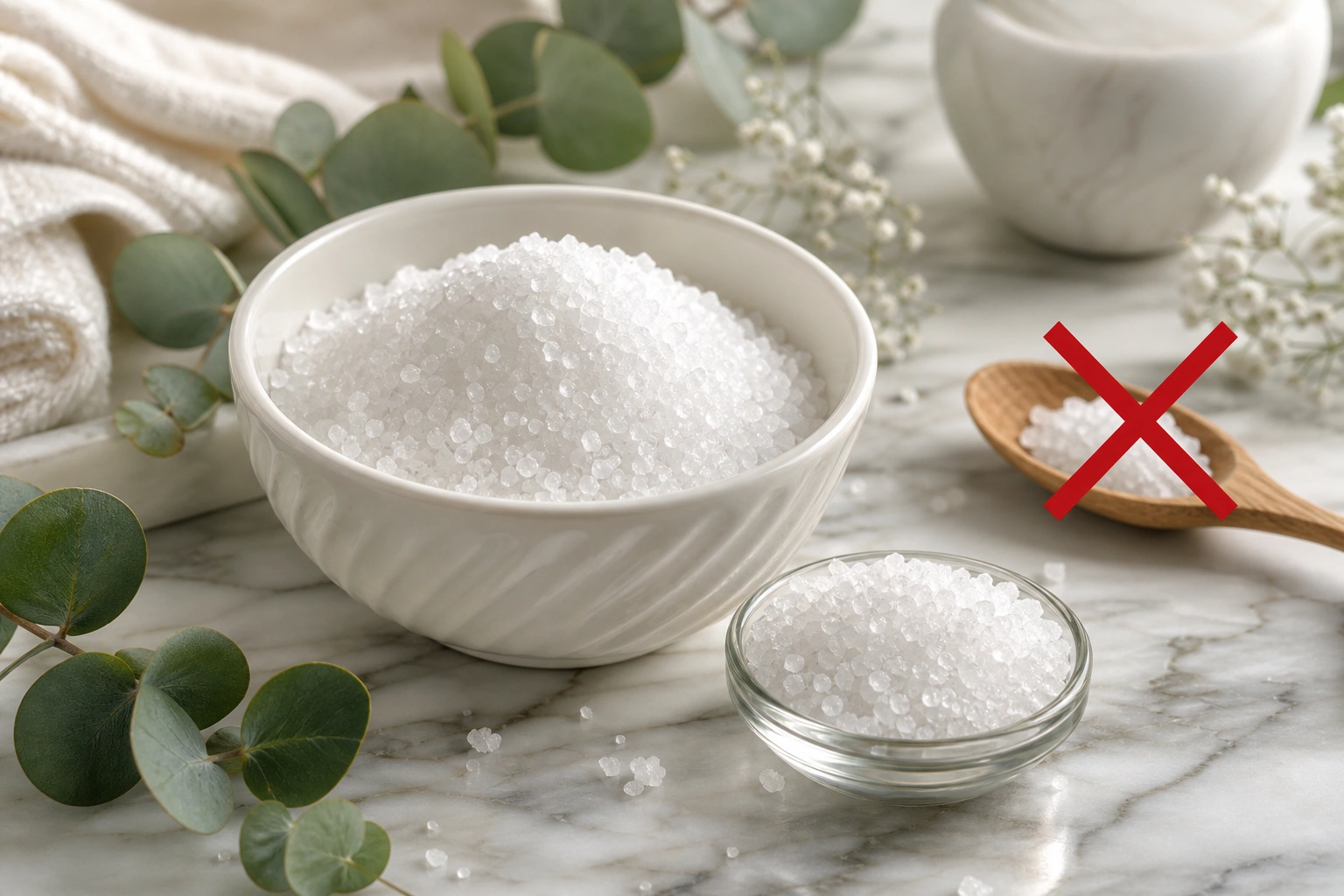
Who Should Absolutely Avoid Eating Epsom Salt
Some groups face disproportionate risk, and for them, the answer to "should I eat Epsom salt?" is an unqualified no:
- People with kidney disease or reduced kidney function — impaired magnesium clearance makes overdose far more likely, even at standard doses
- Pregnant women — intravenous magnesium sulfate is used medically for preeclampsia under strict hospital monitoring, but oral self-dosing is a completely different and dangerous scenario
- Children under 6 — too much variability in how small bodies process and excrete magnesium
- Anyone with heart conditions — the cardiac effects of excess magnesium can be swift and unpredictable
- People on restricted diets or currently fasting — an empty stomach amplifies absorption speed and intensifies side effects
The "Detox" Myth: Why Drinking Epsom Salt Water Isn't What the Internet Claims
Let's address the elephant in the room. A significant number of people searching about Epsom salt safety aren't looking for constipation relief. They're looking at liver flushes, gallbladder cleanses, weight loss protocols, or general "detoxification" programs that circulate endlessly on social media and certain corners of the wellness world.
Here's the uncomfortable truth: your liver and kidneys already detoxify your body. That's literally their job, and they do it continuously, every minute of every day. There is no credible clinical evidence that drinking Epsom salt water flushes toxins, dissolves gallstones, or resets your digestive system. None. Zero peer-reviewed studies supporting those claims.
And those "gallstones" people proudly photograph after completing these cleanses? Multiple studies, including a notable one published in The Lancet, demonstrated that these are actually saponified olive oil — soap-like globules formed by the chemical reaction between olive oil (often a core ingredient in these protocols) and digestive juices. They form in your gut during the cleanse itself. They're not gallstones. They never were.
Drinking Epsom salt as part of these programs can cause real, measurable harm while delivering zero proven benefit. That's a terrible trade by any standard.
Safer Alternatives for What People Are Actually Trying to Achieve
For Constipation Relief
- Increase dietary fiber gradually — aim for 25 to 30 grams daily from whole foods
- Stay consistently well-hydrated throughout the day
- Consider osmotic laxatives like polyethylene glycol (MiraLAX), which has a better-established safety profile for occasional use
- Talk to your doctor if constipation is chronic, because it could be signaling something else entirely
For Magnesium Supplementation
If you're worried about magnesium deficiency — and honestly, many adults don't get enough through diet alone — oral magnesium supplements like magnesium glycinate or magnesium citrate are far better tolerated and much more precisely dosed than dissolving Epsom salt in a glass of water. You actually know what you're getting, milligram by milligram.
For Muscle Recovery and Relaxation
Stick to what Epsom salt does best. Dissolve a cup or two in a warm bath and soak for 15 to 20 minutes. Whether transdermal magnesium absorption is clinically significant remains a matter of scientific debate, but the warm water and forced relaxation time certainly help recovery. And there's essentially no risk involved. It's the one Epsom salt use case where everybody wins.
Frequently Asked Questions
Is Epsom salt the same as regular salt?
No, and this is a really important distinction. Regular table salt is sodium chloride. Epsom salt is magnesium sulfate. They look similar sitting in a bowl, but they're chemically very different compounds with completely different effects on the body. You cannot substitute one for the other in any context.
Can Epsom salt kill you?
In extreme cases, yes. Magnesium sulfate overdose can cause fatal cardiac arrhythmias and respiratory depression. This outcome is rare with a single, properly measured laxative dose in a healthy adult, but the risk increases dramatically with excessive intake, repeated dosing, or impaired kidney function. It's not something to be casual about.
How does Epsom salt taste?
Bitter. Intensely, memorably bitter — the kind of bitter that makes you question every life choice that led you to this moment. Most people who've tried it describe the taste as one of the worst aspects of the entire experience. There's a reason nobody puts it in recipes.
Can I use any Epsom salt brand for internal use?
Only products specifically labeled "USP grade" are manufactured to standards suitable for ingestion. Garden-grade or industrial Epsom salt may contain impurities, contaminants, or additives that should never enter your digestive system. Always check the label before you even consider internal use.
How quickly does Epsom salt work as a laxative?
Typically within 30 minutes to 6 hours. The speed depends on dosage, whether you've eaten recently, your hydration status, and individual physiology. Some people respond very quickly, which is why it's wise to stay close to a bathroom after taking it.
Is it safe to drink Epsom salt water every day?
No. Absolutely not. Repeated daily use can lead to progressive magnesium buildup in the blood, chronic diarrhea, severe electrolyte depletion, and bowel dependency where your intestines stop functioning normally without the osmotic stimulus. It is intended strictly for occasional, short-term use.
Should I consult a doctor before taking Epsom salt internally?
Yes — especially if you have any chronic health conditions, take prescription or over-the-counter medications regularly, are pregnant or nursing, or are considering giving it to a child. When in doubt, just ask. It's a quick conversation with your doctor or pharmacist that could prevent a genuinely serious problem down the road.