

Let's be honest — most of us don't give our feet a second thought until they're absolutely screaming at us. You've been on them all day, they're swollen, achy, maybe a little stiff. Someone mentioned trying an Epsom salt foot bath, so you grabbed a bag from the drugstore. But now you're standing in the bathroom thinking: how long am I actually supposed to soak?
It's a surprisingly common question. And the answer matters more than you'd think. Too short and you won't get much out of it. Too long and you could dry out your skin or cause irritation. There's a sweet spot — and once you know it, you'll wonder why nobody mentioned it sooner.
The Short Answer: How Long Should You Soak Your Feet in Epsom Salt?
Aim for 15 to 20 minutes. That's the general recommendation from dermatologists and podiatrists alike. Here's why that range works:
- Under 10 minutes — The magnesium sulfate (that's what Epsom salt actually is) hasn't had enough time to fully dissolve and interact with your skin. You're basically just washing your feet in slightly salty water.
- 15 to 20 minutes — This is where things get good. Your skin has softened, your muscles have had time to relax, and there's enough contact time for magnesium absorption through the skin.
- Over 30 minutes — Now you're overdoing it. Prolonged soaking strips natural oils from your skin, leaving feet dry, cracked, and sometimes irritated. If you have diabetes or circulation issues, extended soaking is especially risky.
So set a timer. Watch something on your phone. Read a chapter of that book that's been collecting dust on your nightstand. Twenty minutes flies by when you're not standing on your feet.
What Epsom Salt Actually Does
The Science Behind the Soak
Epsom salt isn't regular table salt. It's magnesium sulfate — a mineral compound that dissolves in warm water and has been used for centuries as a home remedy. The basic idea is that when you soak in it, your body absorbs small amounts of magnesium through the skin.
I should be upfront here: the scientific evidence on transdermal magnesium absorption is limited. A handful of small studies suggest some absorption occurs, but we don't have large-scale clinical trials confirming that a magnesium sulfate foot soak significantly raises your magnesium levels. What we do have is a mountain of anecdotal evidence from people who swear by it — and some plausible mechanisms for why it seems to help.
What a Warm Water Foot Soak Can Genuinely Help With
- Muscle soreness and tension — Warm water alone relaxes muscles. Add Epsom salt and the effect seems to get noticeably stronger for a lot of people.
- Minor swelling — Soaking can help reduce puffiness in feet and ankles, particularly after long periods of standing or walking.
- Softening rough skin — Pretty straightforward. The salt acts as a gentle exfoliant while warm water softens calluses and dry patches.
- Stress relief — Don't underestimate this one. Just sitting down, doing nothing, and letting warm water work on tired feet is therapeutic in itself.
What It Won't Do
It won't cure plantar fasciitis. It won't fix a broken toe. It's not a substitute for medical treatment if you've got a serious foot condition. Think of it as maintenance and comfort — not medicine. I feel like that distinction gets lost in a lot of articles on this topic.
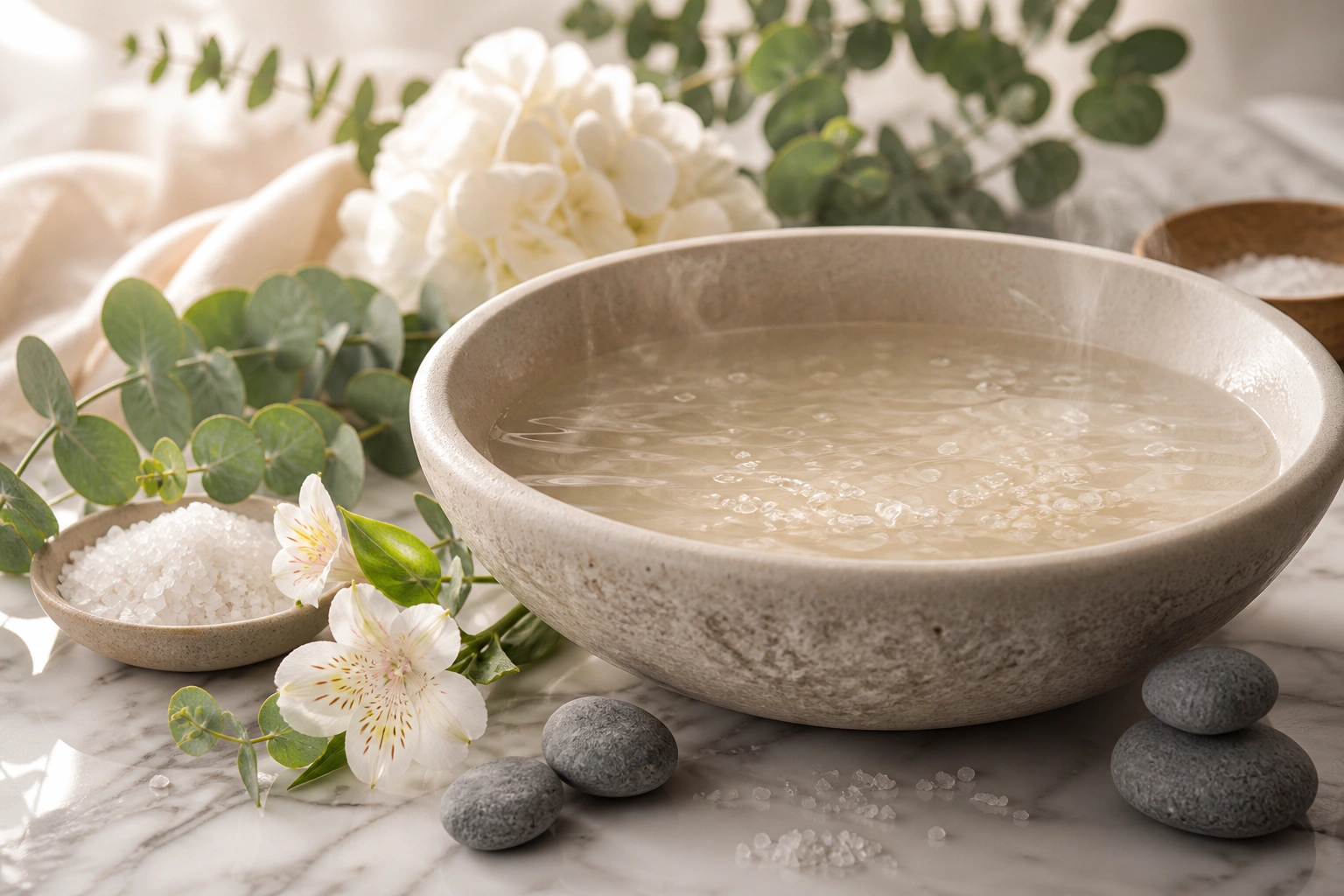
How to Set Up the Ideal Epsom Salt Foot Bath
Getting the ratio right matters. Too little salt and you're not getting much benefit. Too much and it can irritate sensitive skin. Here are the Epsom salt foot soak instructions that actually work:
- Fill a basin with warm water — Not hot. Warm. Somewhere around 92°F to 100°F (33°C to 38°C). You should be able to keep your feet in comfortably without flinching.
- Add half a cup of Epsom salt per gallon of water — Most foot basins hold one to two gallons, so half a cup to one cup is your target range.
- Stir until dissolved — Don't just dump it in and stick your feet in. Give it a solid minute to dissolve completely.
- Soak for 15 to 20 minutes — Keep your feet fully submerged. If the water cools too fast, start slightly warmer or keep a kettle handy to top it off.
- Pat dry thoroughly — Don't rub. Pat. Then moisturize right away — this locks in hydration while your skin is still slightly damp.
Optional Add-Ins That Actually Work
A few drops of tea tree oil can be a good move if you're prone to athlete's foot — it's naturally antifungal. Lavender essential oil is purely for relaxation and scent; no medical claims there, just a nicer experience. And some people toss in a splash of apple cider vinegar for foot odor. The evidence is anecdotal, but it's harmless.
How Often Should You Do This?
Two to three times per week is a solid frequency for most people. Daily soaking is generally unnecessary and can lead to overly dry skin, even if you're religious about moisturizing afterward.
Now, if you're recovering from a particularly brutal day — a long hike, a double shift on your feet, moving apartments — soaking daily for a few days won't cause problems. Just don't turn it into a permanent nightly ritual.
Here's a quick breakdown by situation:
- General relaxation: 2–3 times per week
- Post-exercise recovery: After intense workouts, as needed
- Chronic foot pain: Up to 3 times per week (but talk to your doctor)
- Before a pedicure: Once, about 15 minutes beforehand
- Diabetic foot care: Consult your doctor first — seriously
Who Should Be Careful — or Skip It Entirely
Not everyone should soak their feet in Epsom salt. This part's important, and frankly I don't see it covered well enough in most articles on the topic.
Diabetics need to be cautious. Reduced sensation in the feet means you might not notice water that's too hot. Diabetes also affects skin healing, so any cracks or irritation from over-soaking become a bigger deal than they would be for most people.
Anyone with open wounds or active infections on their feet should skip the soak. Salt in an open wound is exactly as pleasant as it sounds, and you risk introducing bacteria into the wound.
People with severe kidney disease should check with a doctor. Your kidneys regulate magnesium levels, and if they're not working well, even modest increases in magnesium could become problematic.
Pregnant women — occasional warm foot soaking is generally considered safe, but avoid hot water and keep sessions brief. When in doubt, check with your OB.
Signs You're Overdoing It
Watch for skin that feels tight and dry after soaking (even with moisturizer), cracking between your toes, redness or irritation that wasn't there before, or peeling skin on your soles. If any of that shows up, cut back to once a week or shorten your Epsom salt foot bath duration to 10 minutes.
Warm Water vs. Cold Water: Does Temperature Actually Matter?
Yes. Quite a bit.
Warm water — the standard recommendation — boosts blood flow, relaxes muscles, and helps the Epsom salt dissolve properly. This is what you want for general soreness, relaxation, and skin softening. It's the go-to for a reason.
Cold water has its own benefits. It reduces inflammation and can numb minor pain. But here's the catch: Epsom salt doesn't dissolve nearly as well in cold water, so you lose a chunk of the foot soak benefits. If you're dealing with acute swelling — say, after tweaking your ankle — a cold soak without Epsom salt might actually be the smarter play.
Never use hot water. It feels amazing for about 30 seconds, then you're looking at potential burns, increased swelling, and badly dehydrated skin. Keep it comfortable. My personal rule: if you wouldn't put a baby in it, it's too hot.
The Bottom Line
Fifteen to twenty minutes. Half a cup per gallon of warm water. Two to three times a week. Moisturize after. That's genuinely all there is to it.
An Epsom salt foot soak isn't complicated, and it doesn't need to be. It's one of those rare home remedies that's cheap, low-risk, and genuinely makes most people feel better — even if the science hasn't fully caught up to explain exactly why. Sometimes your feet just need a break, and this is one of the simplest ways to give them one.
FAQ
Can I reuse the Epsom salt water for a second soak?
No. The magnesium sulfate concentration drops after the first use, and the water has collected dirt, dead skin cells, and bacteria from your feet. Fresh batch every time — it's cheap enough that there's no reason to cut corners here.
Can kids soak their feet in Epsom salt?
Generally yes, but scale it down. Use a quarter cup of salt per gallon, keep the water lukewarm rather than warm, and limit the warm water foot soak time to about 10 minutes. Always supervise younger children around any basin of water.
Will an Epsom salt foot soak help with toenail fungus?
It might offer some support as part of a broader treatment plan, but it won't cure toenail fungus on its own. Adding a few drops of tea tree oil to your soak could provide some additional antifungal benefit, but persistent fungal infections really do need proper medical treatment. Don't rely on soaking alone.
Is it better to soak feet in the morning or at night?
There's no clinical difference. But practically speaking? Nighttime makes more sense for most people. It helps you wind down after a long day, relaxes sore muscles, and you go straight to bed with moisturized, relaxed feet. Morning soaks work fine too — just make sure you dry your feet completely before putting on socks and shoes.
Can I add Epsom salt to a full bath instead?
Absolutely. The standard recommendation for a full bath is about two cups of Epsom salt. Same 15 to 20 minute soak time. The principles are identical — you're just covering more surface area, which is nice when your whole body is feeling beat up.