
You know that moment. The bath was incredible — swirling colors, fizzy water, the whole spa-at-home experience. Then you pull the drain plug and watch the water disappear, only to find a ring of vivid pink (or blue, or purple) clinging to the sides of your tub. Panic sets in.
Here's the short answer: most quality bath bombs won't permanently stain your tub. But some will leave temporary residue that looks alarming, and a few — particularly cheap ones used on porous surfaces — can absolutely cause lasting discoloration. The difference comes down to ingredients, tub material, and what you do in the first few minutes after draining.
Let's break down why staining happens, which tubs are most at risk, and how to deal with it if it does.
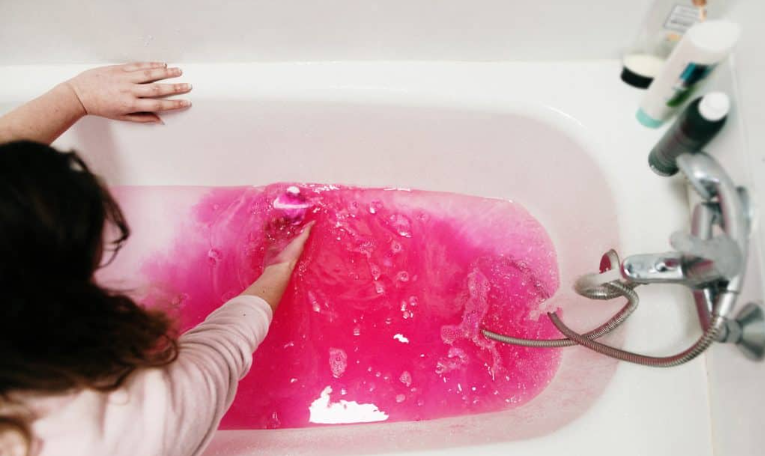
Why Bath Bombs Leave Color Behind
The Role of Dyes and Pigments
Not all color in bath bombs works the same way. There are two main categories: water-soluble dyes and pigments. Understanding the difference matters more than you'd think.
Water-soluble dyes — things like FD&C Red 40 or Blue 1 — dissolve completely in water. They're what give you that uniform, Instagram-worthy color throughout the bath. The problem? Because they dissolve, they can also penetrate textured or porous surfaces. They don't just sit on top; they seep in.
Pigments like micas and iron oxides behave differently. They don't dissolve. Instead, they float on the water's surface or settle along the waterline. That shimmery ring you sometimes see around the drain area? That's mica. It looks dramatic but usually wipes away with a cloth because it never actually bonded with the tub surface.
Cheaper bath bombs tend to use higher concentrations of synthetic dye to get those vivid, eye-catching colors. More dye means more molecules looking for a surface to cling to.
Other Ingredients That Make Things Worse
Color alone isn't always the culprit. Oils and butters — cocoa butter, coconut oil, shea butter — create a thin film on the tub surface. That film acts like glue, trapping dye molecules against the tub wall. Bath bomb residue removal becomes significantly harder when you're dealing with this oil-plus-dye combination rather than dye alone.
Then there's the decorative stuff. Flower petals, dried herbs, chunky glitter — these don't technically stain, but they leave behind gunk that looks like staining and clogs your drain in the process. Not ideal.
Does Your Tub Material Matter?
Yes. Honestly, this is probably the single biggest factor in whether you'll have a problem.
Acrylic and Fiberglass
Most modern tubs fall into this category. Good news: they're non-porous, so color typically wipes right off with a damp cloth. The catch is that if you've been scrubbing your tub with abrasive cleaners for years, you've likely created micro-scratches in the surface. Those tiny grooves give dye somewhere to settle, and suddenly your "non-porous" tub is holding onto color.
Porcelain and Enamel-Coated Tubs
When the enamel coating is intact, these are quite resistant. The issue is older tubs — the ones in rental apartments and grandma's house — where the enamel has worn thin or chipped. Exposed cast iron or steel underneath is porous and will absorb dye readily. If your tub has rough patches or visible wear, that's where staining will happen first.
Natural Stone and Cultured Marble
These are the highest-risk surfaces. Stone is inherently porous, and even sealed stone can absorb concentrated dye over time. Bathtub staining prevention is critical if you have a marble or stone tub — or honestly, you might want to skip heavily dyed bath bombs altogether.
Grout Lines and Caulking
People forget about these. Your tub surface might be perfectly fine, but the white grout between tiles and the silicone caulking around the edges? They absorb color like a sponge. I've seen tubs where the porcelain is spotless but the caulk line looks permanently tie-dyed.
Which Colors Stain the Most?
Not all colors carry equal risk. Reds, pinks, and deep purples are the worst offenders — those dye molecules are notoriously clingy and show up vividly against light surfaces. Blues and greens fall in the moderate-risk category, especially on white or cream-colored tubs. Yellows and oranges are generally the safest, though "safe" doesn't mean zero risk.
The specific bath bomb color ingredients vary wildly between brands. A quick glance at the ingredient list tells you a lot — if synthetic dyes are listed near the top, expect more intense color and more potential for residue.
How to Prevent Staining Before It Happens
Choose Your Bath Bombs Wisely
Look for brands that use skin-safe micas as their primary colorant instead of FD&C dyes. Micas give you color without the penetration risk. If you want to eliminate the concern entirely, dye-free bath bombs exist — you still get the fizz, the fragrance, and the skin-softening ingredients without any color risk whatsoever.
Reading ingredient lists takes ten seconds. If "Red 40" or "Blue 1" appears high on the list (ingredients are listed by concentration), expect more color in the water and more potential on your tub walls.
Prep Your Tub
This sounds overly simple, but rinse your tub before filling it. A dry, dusty surface gives dye something to grip onto. A quick rinse with warm water creates a smoother, less receptive surface. Some people apply a thin layer of coconut oil or baby oil to the tub walls as a barrier — it works in theory, though it does make the tub slippery, so weigh that tradeoff carefully.
Rinse Immediately After Draining
This is the single most effective thing you can do. Don't let colored water sit in the tub. Don't walk away and come back an hour later. As the water drains, spray down the sides with your shower head or a cup of clean water. A quick warm rinse within the first minute or two removes the vast majority of surface color before it has any chance to set. Seriously — this one habit prevents about 90% of staining complaints.
Cleaning Bathtub After Bath Bombs: What Actually Works
For Fresh Residue (Same Day)
If you notice color after your bath, don't stress. Make a paste with baking soda and a few drops of dish soap, apply it to the colored areas, and gently scrub with a soft cloth. This provides mild abrasion without scratching. A melamine sponge (Magic Eraser) also works well on acrylic — just use light pressure to avoid dulling the finish over time. For mineral-based residue, a spray of white vinegar followed by wiping handles it quickly.
For Set-In Stains
If color has been sitting for days, you need something stronger. Mix cream of tartar with lemon juice into a paste, apply it to the stain, and leave it for 15 to 20 minutes before scrubbing. Alternatively, soak paper towels in hydrogen peroxide, lay them over the stained area, and wait an hour — the peroxide slowly lifts the dye. A bleach-based bathroom cleaner is the nuclear option, but don't use it on colored tubs or natural stone.
What NOT to Do
Avoid steel wool or anything highly abrasive. Yes, it'll remove the current stain, but it creates scratches that make every future bath bomb more likely to leave marks. Never mix bleach and vinegar — that produces toxic chlorine gas. And skip acetone on acrylic tubs entirely; it can cloud or permanently damage the surface.
When a Bath Bomb Actually Ruins Your Tub
Let's be realistic about this. Permanent staining from bath bombs is uncommon, but it does happen. The typical scenario involves a cheap bath bomb loaded with industrial-grade dye, used in an older tub with compromised enamel, where the colored water sat for hours before anyone rinsed it.
Most of the "stains" people panic about online disappear within 24 to 48 hours on their own, even without scrubbing. The dye molecules gradually release from the surface, especially with regular water exposure. If you've tried multiple cleaning methods over several days and the color hasn't budged, that's when you might be looking at something more permanent — and a professional cleaning service with specialized products might be worth the call.
Dye-Free and Low-Risk Alternatives
If staining anxiety is ruining your bath time, there are plenty of options. Many brands now specialize in dye-free bath bombs that rely on essential oils, clays, and botanical extracts for their appeal rather than color. You still get the fizz, the scent, and the skin benefits.
For the DIY crowd: mix citric acid, baking soda, a few drops of essential oil, and white kaolin clay. Press it into a mold, let it dry, and you've got a fizzy, skin-softening bath bomb with zero staining potential. Milk baths and colloidal oat soaks are another route — deeply soothing for skin without a single pigment involved.
The Bottom Line
Colored bath bombs can leave temporary marks on your tub, but permanent staining is genuinely uncommon if you're using decent products and practicing basic aftercare. Know your tub material, rinse immediately after draining, and glance at ingredient lists before buying. You don't have to give up colorful baths — just be a little strategic about it, and keep a box of baking soda under the sink for peace of mind.
Frequently Asked Questions
Will a bath bomb stain my skin too?
Temporary tinting can happen, especially with darker colors on lighter skin. It's not a true stain — the color sits on the outermost layer of dead skin cells and rinses off with your next shower, sometimes even just with a towel. If you're heading somewhere important right after your bath, maybe skip the deep purple bomb.
Can I use bath bombs in a jetted or whirlpool tub?
Surface staining is one concern, but the bigger issue is what happens inside the jet lines. Oils and dyes can build up in the pipes over time, leading to discolored water shooting out during future baths. If you use bath bombs in a jetted tub, run a cleaning cycle afterward with the jets on and plain hot water.
How do I know if a bath bomb is tub-safe before buying?
Look for phrases like "non-staining formula" on the packaging. Check customer reviews — people are very vocal about staining. If you're still unsure, drop the bath bomb in a white ceramic bowl with warm water, let it sit for 30 minutes, then drain and check. If the bowl stains, your tub will too.
Are bath bombs safe for septic systems?
In small quantities, most bath bombs are fine for septic systems. The citric acid and baking soda dissolve completely. The concern is with glitter (especially non-biodegradable types) and large petal pieces that don't break down. If you're on septic, stick to bombs without chunky additives.
Do bath bombs expire, and does that affect staining?
Bath bombs don't expire in a safety sense, but they do degrade. Old bath bombs lose their fizz as the citric acid weakens, which means ingredients don't dissolve as thoroughly in the water. Separated oils rise to the surface and coat the tub more heavily. A fresh bath bomb is always less likely to leave residue than one that's been sitting in your cabinet for two years.