
I'll be upfront — I was the person who rolled my eyes at CBD everything. CBD gummies, CBD dog treats, CBD-infused pillowcases (yes, those exist). So when a friend handed me a CBD bath bomb and said "just try it," I almost laughed. But a month later, here I am writing about it. Not because it changed my life in some dramatic way, but because what actually happened was more interesting and more nuanced than I expected.
Why I Decided to Try CBD Bath Bombs in the First Place
The honest answer? I was tired. Not sleepy-tired, but that deep, accumulated fatigue that comes from sitting at a desk ten hours a day with shoulders permanently welded to my ears. I'd been dealing with lower back tension for months, and my sleep had gotten patchy — falling asleep fine, then wide awake at 3 AM staring at the ceiling.
I'd tried magnesium supplements, melatonin, fancy pillow sprays. Some helped a little. Nothing stuck. When I kept seeing hemp-infused bath products popping up in my feed — not ads, but actual people I knew talking about them — curiosity won out over skepticism. The specific trigger? A particularly brutal Wednesday where my neck was so locked up I couldn't turn my head to check my blind spot while driving. That night I unwrapped the bath bomb my friend had given me weeks earlier.
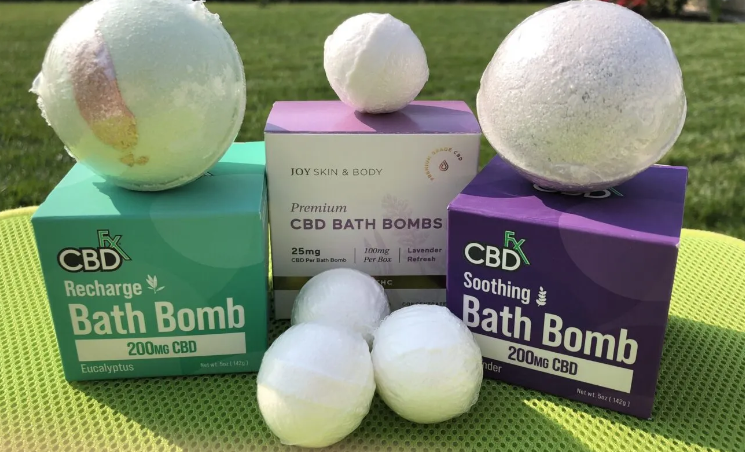
What Exactly Are CBD Bath Bombs and How Do They Work?
The Basics — CBD Meets Your Bathwater
Cannabidiol (CBD) is a compound found in hemp plants. Unlike THC, it doesn't get you high. In a bath bomb, CBD is typically suspended in a carrier oil — often coconut or sweet almond — along with baking soda, citric acid, and whatever essential oils or fragrances the brand uses. When the bomb dissolves, CBD disperses into the water and comes into contact with your skin.
Here's the thing about skin absorption: your skin is actually your largest organ, and it has its own endocannabinoid receptors. CBD doesn't need to enter your bloodstream to interact with these receptors. Warm bathwater helps because heat opens your pores and increases blood flow to the skin's surface, which theoretically improves how much CBD your skin can take in.
You'll see three types on labels. CBD isolate is pure CBD, nothing else from the plant. Broad-spectrum includes other cannabinoids and terpenes but zero THC. Full-spectrum keeps everything in, including trace amounts of THC (under 0.3% to be legal). For bath bombs, broad-spectrum seems to be the sweet spot most brands land on.
What Sets Them Apart from Regular Bath Bombs
A standard bath bomb gives you fizz, color, maybe some essential oils and moisturizing agents. Nice enough. A CBD bath bomb adds the cannabidiol element, which interacts with CB2 receptors in your skin — receptors involved in managing inflammation and pain signaling at a local level.
Dosage varies wildly. I've seen products with 25mg of CBD (barely worth mentioning, in my experience) up to 200mg. Most quality products sit in the 50–100mg range. Below 50mg, I genuinely couldn't tell the difference from a regular bath bomb. That's not a scientific claim — just what I noticed over a month of testing.
My First CBD Bath Bomb Experience — Honest Impressions
That first Wednesday night, I dropped the bomb in hot water and watched it fizz. Smelled like eucalyptus and something earthy underneath. I climbed in skeptical and slightly annoyed at myself for buying into the hype.
First ten minutes: nothing remarkable. Just a bath. The water felt slightly silkier than usual, which I attributed to the carrier oils. Around the fifteen-minute mark, I noticed my shoulders had dropped away from my ears without me consciously relaxing them. Could have been the hot water alone. Could have been placebo. I'm not ruling either out.
By twenty minutes, there was a heaviness in my limbs — not unpleasant, more like that feeling after a really good massage where your body just feels dense and warm. My skin felt soft, almost coated. Mentally, I was calmer than I'd been all day, but again — hot bath, quiet room, no phone. Hard to isolate variables.
What surprised me: the effects lingered. I got out after thirty minutes, and that loose, heavy feeling stayed with me for a good hour afterward. I slept through the night for the first time in weeks. What disappointed me: I wanted something more dramatic. Some obvious moment where I could point and say "that's the CBD working." It wasn't like that. It was subtle.
One Month In — Did Anything Actually Change?
Week-by-Week Breakdown
Week 1: I used three bath bombs that first week (excessive, I know). I was hyper-aware of every sensation, probably over-attributing things to the CBD. The relaxing CBD soak became my evening ritual, and I slept better on bath nights. But was that the CBD or just the act of taking a long bath instead of scrolling my phone until midnight?
Week 2: I started noticing my skin. Specifically, the dry patches on my shins that usually plague me were softer. My evening wind-down was faster — I'd get out of the bath and feel genuinely ready for sleep within thirty minutes. I also tried a lower-dose bomb (25mg) and honestly felt nothing beyond a normal bath.
Week 3: Experimentation phase. I tried four different brands, ranging from a $5 gas station find to a $18 artisanal option. The difference was stark. Cheap products felt like regular bath bombs with a hemp leaf on the label. The pricier ones with actual third-party testing delivered that consistent body-heaviness and skin softness I'd come to expect.
Week 4: Settled into using them twice a week. Not daily — partly cost, partly because I didn't want to build tolerance or lose the "specialness" of the ritual. Honest assessment: they earned a spot in my routine, but a supporting role, not a starring one.
CBD Bath Bomb Benefits I Personally Noticed
The cannabidiol bath experience genuinely improved my evening wind-down. On bath nights, I fell asleep faster and woke up less. My skin stayed hydrated longer — enough that I started thinking of it as part of my CBD skincare routine rather than just relaxation. After gym days, the muscle recovery felt slightly accelerated. Not dramatically, but my usual next-day soreness was dialed down maybe 20–30%.
The sleep thing was the biggest win. Not miraculous, not every single time, but consistent enough over four weeks that I trust the pattern.
Things That Didn't Live Up to the Hype
Let me be clear: this did not fix my chronic lower back issue. It made it more bearable on bath nights, but by morning, same old tension. Anyone marketing CBD bath bombs as a pain solution is overselling. Some products — particularly the cheaper ones — felt identical to a regular bath bomb. I suspect they contained negligible actual CBD despite what the label claimed. And the cost adds up. At $12–18 per bomb, twice a week, you're looking at $100–150 a month. That's a real consideration.
What I Learned About Choosing the Right Product
Quality Indicators That Actually Matter
Third-party lab testing is non-negotiable. If a brand doesn't publish Certificates of Analysis (COAs) showing exactly how much CBD is in the product, skip it. Look for CO2 extraction — it's cleaner than solvent-based methods. The best bombs I tried combined CBD with Epsom salt (magnesium for muscles), quality essential oils, and moisturizing butters like shea or cocoa. Dosage-wise, I'd recommend starting at 50mg minimum. Below that, I couldn't distinguish the experience from a regular bath.
Red Flags I Wish I'd Known Earlier
If the label says "hemp seed oil" without mentioning CBD or cannabidiol specifically, you're buying a regular bath bomb with a marketing spin. Hemp seed oil contains zero CBD. Also watch for products making medical claims — "cures anxiety," "eliminates pain" — that's a sign of a brand more interested in sales than honesty. Vague labeling with no milligram count listed? Hard pass.
How CBD Bath Bombs Fit into a Broader Self-Care Routine
The ritual matters as much as the product. I get more out of my CBD soak when I dim the lights, leave my phone in another room, and put on ambient music. The bath bomb becomes an anchor for the whole wind-down experience rather than the sole source of relaxation.
Twice a week works for me — enough to maintain the benefits without burning through my budget. I've tried other CBD topicals (creams, roll-ons), and they work differently. More targeted, less whole-body. The bath bomb approach is better for general relaxation and skin benefits; topicals are better for specific sore spots.
If cost is a concern, once a week still made a noticeable difference in my sleep patterns on those nights. You don't need to go all-in to see whether this works for you.
My Final Take — Who Should (and Shouldn't) Try These
CBD bath bombs are best suited for people who already enjoy baths and want to enhance that experience. If you're looking for a better evening wind-down, mild muscle tension relief after active days, or a way to improve your sleep routine, they're worth trying. The CBD bath bomb benefits are real — just more subtle than marketing would have you believe.
They're probably not worth it if you're expecting dramatic pain relief, a replacement for medication, or some kind of transformative wellness experience. They're a nice addition to a self-care routine, not a foundation for one.
Cost-benefit breakdown: at two baths per week with a quality product ($12–15 per bomb), I'm spending roughly $100–120 monthly. For me, the improved sleep alone justifies that. For someone on a tighter budget, once a week still delivers noticeable benefits and cuts the cost in half.
What I'll keep doing: twice-weekly soaks with 75–100mg broad-spectrum bombs, paired with my full wind-down ritual. What I've stopped doing: expecting them to solve problems they were never designed to solve. That shift in expectations made all the difference.
Frequently Asked Questions
Will a CBD bath bomb make me feel high?
No. Legal CBD products contain 0.3% THC or less, and topical application through bathwater doesn't produce psychoactive effects. You might feel deeply relaxed, but that's not the same as being high. Think post-massage calm, not altered consciousness.
How long should I soak for best results?
Twenty minutes minimum, ideally thirty to forty. Your skin needs time to absorb the CBD, and the warm water needs time to open your pores fully. I noticed the most benefit around the 25–30 minute mark. Water temperature should be warm but not scalding — around 37–38°C (98–100°F) is ideal.
Can CBD bath bombs help with skin conditions like eczema or psoriasis?
There's emerging research on CBD's anti-inflammatory properties that looks promising for inflammatory skin conditions. Anecdotally, many users report relief. However, this isn't a replacement for medical treatment. If you have a diagnosed skin condition, talk to your dermatologist before relying on CBD products as part of your approach.
Are CBD bath bombs safe during pregnancy?
There's limited research on CBD use during pregnancy, and most healthcare providers recommend avoiding CBD products entirely during pregnancy and breastfeeding. Always consult your doctor — this isn't an area to experiment with based on internet advice.
Will using a CBD bath bomb show up on a drug test?
With CBD isolate or broad-spectrum products, it's highly unlikely. Full-spectrum products contain trace THC, and while the amounts are tiny, there's a small theoretical risk with very frequent use. If drug testing is a concern for you, stick with isolate or broad-spectrum and verify through the product's COA that THC is non-detectable.
How do I store CBD bath bombs properly?
Keep them in a cool, dry place away from direct sunlight and humidity. A sealed container or zip-lock bag works well. Most have a shelf life of six to twelve months. If they start losing their scent or the fizz seems weak when you drop them in water, they've probably degraded.