
Shower steamers have exploded in popularity as an affordable wellness ritual, promising spa-like aromatherapy in your daily routine. But behind the marketing fizz lies a legitimate question: do these little tablets actually steam, or are we paying for clever branding? This guide breaks down the chemistry, the evidence, and the practical techniques that separate a transcendent shower from a disappointing puddle of pink residue.
What Are Shower Steamers, Exactly?
Before we evaluate effectiveness, we need a clear, shared definition. Confusion about what shower steamers actually are drives most disappointment with them.
The Basic Composition
A typical shower steamer contains four core ingredients: sodium bicarbonate (baking soda), citric acid, essential oils, and a binding agent such as witch hazel, kaolin clay, or cornstarch. Some formulations include menthol crystals, surfactants, or natural colorants.
The baking soda and citric acid form the reactive base; the essential oils provide the aromatic payload; the binder holds the puck together until water activates the reaction.

Shower Steamers vs. Bath Bombs vs. Diffusers
Shower steamers are often confused with bath bombs, but the formulations differ. Bath bombs contain skin-conditioning oils, butters, and emollients designed for direct skin contact in a tub.
Shower steamers, by contrast, are concentrated for airborne diffusion and typically lack moisturizing agents — using one in a bath can irritate skin. Diffusers, meanwhile, use heat or ultrasonic vibration to disperse oils, requiring no chemical reaction at all.
The Promise on the Label
Manufacturers commonly advertise sinus relief, stress reduction, energizing morning routines, and "spa-quality" experiences at home. These claims range from scientifically supported (aromatherapy mood effects) to exaggerated (medical-grade decongestion).
Do Shower Steamers Actually Steam? The Short Answer
Here's the direct answer most articles dance around: no, shower steamers do not produce steam themselves. They release aromatic compounds into the steam your shower already produces.
The Technical Truth: It's Not "Steam" — It's Vapor Release
The fizzing reaction generates carbon dioxide gas, not water vapor. What carries the essential oil molecules to your nose is the hot, humid air created by your running shower — not the steamer itself.
Think of a shower steamer as an aromatic accelerator: it loads existing steam with volatile compounds. Without a hot, steamy bathroom, the product effectively becomes a slow-fizzing scented rock.
Why the Confusion Exists
The product name is partly to blame. Words like "steamer" and marketing phrases like "releases steam-activated aromatherapy" imply the tablet itself is generating vapor. In reality, "steam-activated" simply means the heat and humidity activate oil volatilization — which is a very different mechanism.
The Science of How Shower Steamers Work
Understanding the underlying chemistry explains why placement, water temperature, and bathroom conditions matter so much.
The Acid-Base Reaction
When water contacts the steamer, citric acid (C₆H₈O₇) reacts with sodium bicarbonate (NaHCO₃) to produce sodium citrate, water, and CO₂ gas. The vigorous fizzing physically lifts and disperses essential oil droplets that were trapped in the dry tablet matrix.
Essential Oil Volatilization
Essential oils are composed of volatile organic compounds that evaporate readily at warm temperatures. In a hot, humid shower environment, these molecules transition from liquid to gas more rapidly, saturating the air with scent.
This is why the same steamer in a cold, dry room produces almost no perceptible aroma — volatilization rates plummet at lower temperatures.
The Role of Bathroom Humidity
An enclosed, steamy bathroom is non-negotiable for shower steamer effectiveness. Humid air carries scent molecules more effectively and slows their dissipation, extending the aromatic experience.
Optimal Water Temperature
Research on aromatic compound release suggests water temperatures between 40°C and 43°C (104–110°F) provide the ideal balance: hot enough to volatilize oils efficiently, but not so hot as to be unsafe or rapidly dissolve the steamer.
Bathroom Size and Airflow
Smaller bathrooms with closed doors create higher concentrations of aromatic vapor. Running an exhaust fan or leaving the door open during use vents the very compounds you're paying for — defeating the purpose entirely.
What the Evidence Says About Effectiveness
Aromatherapy occupies a middle ground in scientific literature: some claims are well-supported, others are speculative.
Aromatherapy Research at a Glance
Peer-reviewed studies on inhaled eucalyptus, peppermint, and lavender have documented measurable physiological effects, including changes in heart rate variability, perceived alertness, and self-reported stress levels. The effects are modest but real.
Sinus and Congestion Relief Claims
Eucalyptol (1,8-cineole) and menthol have demonstrated decongestant properties in clinical research, primarily by stimulating cold receptors in the nasal passages and creating a sensation of clearer breathing. However, shower steamers contain far lower concentrations than medicated vapor products — expect comfort, not clinical decongestion.
Mood and Stress Effects
Lavender inhalation has consistently shown small but measurable reductions in anxiety markers in controlled studies. Citrus oils correlate with improved mood ratings. The combination of warm water, enclosed quiet space, and scent appears to amplify these effects.
What Shower Steamers Cannot Do
They are not medical treatments. They will not cure infections, replace a humidifier (they don't add meaningful moisture to room air), or substitute for prescribed respiratory therapy. Setting these boundaries up front prevents disappointment.
How to Use Shower Steamers for Maximum Effect
Most negative reviews trace back to user error. Following these five steps dramatically improves results.
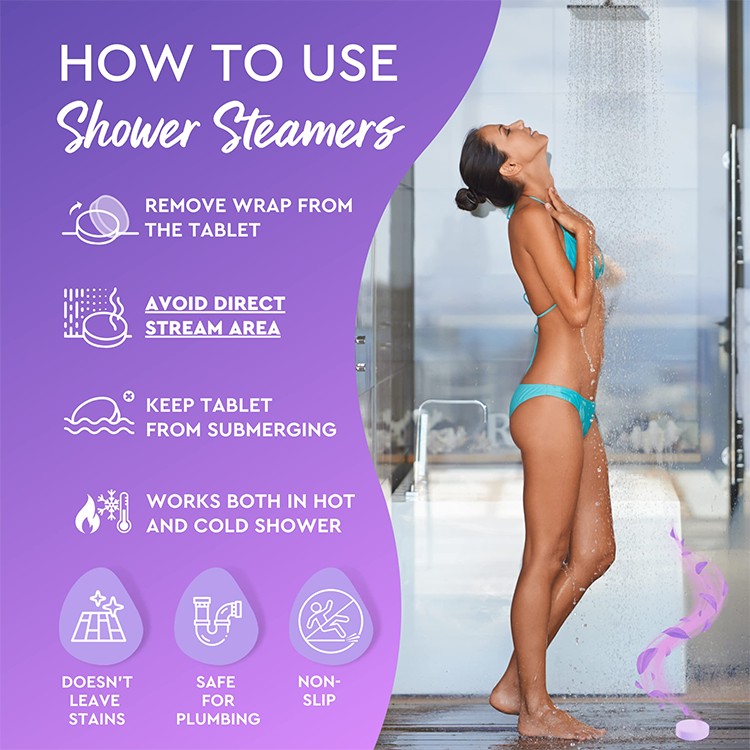
Step 1: Prep Your Shower Environment
Close the bathroom door and run hot water for 1–2 minutes before unwrapping the steamer. This pre-loads the room with the humidity needed to carry volatilized oils.
Step 2: Correct Placement
Place the steamer on the shower floor in a corner away from the direct water stream. Proper placement extends a steamer's working life from roughly 2 minutes (under direct flow) to 10–15 minutes — a 5- to 7-fold improvement in usable aromatherapy.
Step 3: Activate with Indirect Water Contact
Allow splashes, mist, or a quick deliberate spray to activate the surface. Slow, controlled fizzing releases oils gradually rather than dumping the entire payload in seconds.
Step 4: Inhale Deeply and Mindfully
Take slow, deep breaths through your nose for the first 30–60 seconds after activation, when essential oil shower bomb concentrations peak. Pause occasionally — your olfactory receptors recover during brief breaks, restoring scent perception.
Step 5: Dispose and Ventilate Properly
Rinse residue down the drain, wipe the placement spot to prevent slipperiness, and run the exhaust fan after you exit to clear excess humidity from the room.
Common Reasons Shower Steamers "Don't Work"
If your experience has been underwhelming, one of these factors is almost certainly responsible.
Low-Quality Essential Oils
Many budget products use synthetic fragrance oils labeled simply as "fragrance" or "parfum." These produce scent but lack the volatile aromatic compounds responsible for therapeutic effects. Read labels for specific oil names: Eucalyptus globulus, Mentha piperita, Lavandula angustifolia.
Incorrect Placement Under Direct Water
Putting the steamer where water hits it directly dissolves it in under 90 seconds with minimal scent release. The fizz looks impressive; the aroma is gone before you've finished shampooing.
Insufficient Bathroom Steam
Cold or lukewarm showers, large bathrooms, open doors, and active ventilation fans all neutralize shower steamer vapor release. Without ambient steam, there's no carrier for the oils.
Olfactory Fatigue
Your nose adapts to constant smells within 2–5 minutes — a phenomenon called olfactory adaptation. The scent is still in the air; you've simply stopped registering it. This is normal, not a product defect.
How to Choose an Effective Shower Steamer
Quality varies enormously across the market. These criteria separate effective formulations from glorified scented chalk.
Essential Oil Concentration
Look for products that disclose essential oil percentages. Effective formulations typically contain 1.5–3% essential oils by weight. Below 1%, the aromatic payload is too small to overcome ventilation losses.
Ingredient Transparency
Red flags include vague terms like "fragrance," "parfum," or "proprietary aromatherapy blend." Reputable brands list each oil by botanical name and disclose binding agents.
Size and Density
Denser, heavier steamers (40 grams or more) outperform thin, crumbly tablets. A well-compressed product holds together longer, releasing oils gradually rather than disintegrating in a single burst.
Price-to-Performance Benchmarks
Quality shower steamers currently retail in the $1.50–$4.00 per unit range. Below this, ingredient quality typically suffers; above it, you're often paying for branding rather than performance.
DIY vs. Store-Bought: Which Steams Better?
Making your own steamers is genuinely viable, but the trade-offs are real.
Cost Comparison
Homemade shower steamers cost roughly $0.40–$0.80 per unit when made in batches, a significant savings for regular users. Bulk essential oils represent the largest input cost.
Control Over Ingredients
DIY gives you complete control — ideal for users with sensitivities, allergies, or strong preferences for specific therapeutic-grade oils. You can also avoid synthetic colorants and preservatives entirely.
Performance Trade-offs
Commercial manufacturers use specialized binders and high-pressure compression equipment that home cooks cannot replicate. The result: store-bought steamers often last longer and fizz more consistently than homemade versions, even with comparable oil quality.
Safety Considerations
Aromatherapy shower tablets are generally safe, but they're not risk-free for everyone.
Essential Oil Sensitivities
Common irritants include cinnamon, clove, citrus, and ylang-ylang. If you experience headaches, skin redness, or respiratory irritation, discontinue use and identify the offending oil.
Pets in the Household
Eucalyptus, tea tree, peppermint, and citrus oils can be toxic to cats and harmful to dogs even via airborne exposure. Keep pets out of the bathroom during and immediately after use, and ventilate thoroughly before allowing them back in.
Asthma and Respiratory Conditions
Concentrated aromatics can trigger asthma attacks in sensitive individuals. If you have asthma, COPD, or chronic respiratory conditions, consult your physician before incorporating shower steamers into your routine.
Slip Hazards
Undissolved residue and oil films can make shower floors slippery. Rinse the area thoroughly after use and consider a textured shower mat for added safety.
Frequently Asked Questions
Do shower steamers really work, or is it just a placebo?
They produce real, measurable scent release with documented aromatherapy effects on mood and perceived congestion relief. That said, the experience is amplified by placebo and ritual effects — which are not "fake," just additive to the chemistry.
How long does a shower steamer last?
Properly placed in a corner away from direct water, a quality steamer lasts 10–15 minutes. Placed directly under the water stream, expect just 1–3 minutes of activity.
Can I use a shower steamer in a bathtub?
Technically yes, but it's not recommended. Shower steamers lack the skin-conditioning agents found in bath bombs and may cause irritation, especially for sensitive skin or when oils float on the water surface.
Are shower steamers the same as Vicks or vapor rubs?
No. Vapor rubs are regulated over-the-counter medications with standardized concentrations of menthol, camphor, and eucalyptol. Shower steamers are cosmetic products with much lower active concentrations and no medical claims.
Why doesn't my shower steamer smell strong?
The most likely culprits are low essential oil concentration, placement under direct water, insufficient bathroom humidity, or olfactory fatigue from prolonged exposure. Address these in order to troubleshoot.
Can I make shower steamers without essential oils?
Yes, but the result will be a fizzing tablet with no aromatherapy benefit. The essential oils are the entire functional point — without them, you have decorative chemistry.
How often can I use shower steamers?
Daily use is generally safe for healthy adults. Rotating between different scents prevents olfactory adaptation and keeps the experience fresh, since your brain dampens response to repeatedly encountered smells.
Do shower steamers expire?
Yes. Essential oils oxidize and degrade over 6–12 months, reducing aromatic potency even if the baking soda and citric acid still fizz vigorously. Store in airtight containers away from heat and light to maximize shelf life.
The Verdict: Are Shower Steamers Worth It?
Shower steamers occupy an honest middle ground — neither miracle product nor marketing scam. The question isn't whether they work, but whether they work for you.
Who Benefits Most
Aromatherapy enthusiasts, apartment dwellers without bathtubs, congestion sufferers seeking gentle adjunct relief, and anyone craving a low-effort wellness ritual will find genuine value in shower steamer effectiveness when used correctly.
Who Should Skip Them
People with severe asthma, multi-pet households where ventilation is limited, users expecting medical-grade decongestion, and anyone who showers with the door open in a large bathroom will likely be disappointed.
Realistic Expectations Going Forward
The honest takeaway: shower steamers do not generate steam, but they do release vapor-borne aromatic compounds effectively into the steam your shower already produces. Manage expectations, follow the placement and humidity guidelines above, and choose products with transparent essential oil concentrations. Do that, and the answer to "do shower steamers work?" shifts from skeptical to a confident, evidence-based yes.