
I'll be honest — for the longest time, I just eyeballed the Epsom salt. Grabbed a handful, tossed it in the tub, hoped for the best. It wasn't until I started dealing with persistent muscle tightness from sitting at a desk all day that I actually looked into whether I was doing it right. Turns out, the amount you use genuinely matters. Not in a life-or-death way, but enough that it's worth getting dialed in.
So let's walk through this properly — how much to use, why it works, and how to get the most out of every soak.
What Even Is Epsom Salt, and Why Are People Dumping It in Their Tubs?
First things first. Epsom salt isn't really salt. Not the kind you'd put on your eggs, anyway. It's magnesium sulfate — a mineral compound that was first found in the spring waters of Epsom, England, sometime in the 1600s. The name just stuck around because, well, that's how naming things worked back then.
When you dissolve magnesium sulfate in warm water, those minerals become available for your skin to interact with. And magnesium is kind of a big deal in your body. It's involved in over 300 enzymatic reactions — muscle function, nerve signaling, stress regulation, you name it. Sulfate, the other half of the compound, plays a supporting role in joint health and certain metabolic processes.
Now, here's where I want to be straight with you: whether your skin actually absorbs a meaningful amount of magnesium during a 15-minute soak is still being debated. Scientists haven't fully settled that question. But millions of people report feeling noticeably better after a magnesium sulfate soak, and there's enough preliminary research — plus centuries of anecdotal use — that it's hard to dismiss entirely. At the very least, a warm mineral bath feels fantastic. That alone has value.
So, How Much Epsom Salt Should You Actually Use?
This is the part everyone wants to know, and thankfully the answer is pretty straightforward.
The Standard Recommendation
For a standard bathtub filled with warm water — we're talking roughly 40 gallons — use about 2 cups of Epsom salt. That works out to approximately 500 grams, or just about one pound.
This Epsom salt dosage is what most brands print on their packaging, and it's what wellness practitioners and dermatologists typically suggest. It creates a mineral-rich soak that's concentrated enough to be effective without going overboard.
Adjusting Based on Your Tub Size
Obviously, not every bathtub is the same. My apartment tub is laughably small compared to my parents' soaking tub. Here's a rough breakdown:
- Standard bathtub (~40 gallons): 2 cups (500g)
- Small or shallow tub (~25 gallons): 1 to 1.5 cups
- Large soaking tub (~60 gallons): 3 cups
- Garden tub or oversized (~80+ gallons): 4 cups
The ratio you're shooting for is roughly 1 cup per 20 gallons of water. And look, you don't need to measure your tub's volume down to the gallon. This isn't baking. A little more or a little less isn't going to cause any issues.
For a Foot Soak
Don't have time for a full bath? A foot soak works surprisingly well. Pour about half a cup into a basin of warm water and let your feet sit for 15 minutes. I do this on weeknights when I don't feel like running a whole bath but my feet are killing me after a long day. It's quick, easy, and genuinely soothing.
Does Using More Epsom Salt Mean Better Results?
I had this exact thought once. If two cups is good, wouldn't four be even better? Maybe I could turn my bathtub into some kind of mineral-therapy powerhouse.
Nope. There's a saturation point. Water can only dissolve so much magnesium sulfate at a given temperature. Once you hit that limit, the extra crystals just sit at the bottom of your tub, undissolved and useless. You're literally wasting product.
Worse, going heavy on the Epsom salt can actually dry out your skin. Which kind of defeats the whole purpose if you're soaking for relaxation and skin benefits, right?
If you want a more intense experience, play with water temperature and soak duration instead of just adding more salt. A slightly warmer bath held for the full 20 minutes will do more for you than a lukewarm tub with a mountain of dissolved minerals in it.
How to Take an Epsom Salt Bath the Right Way
Getting the amount right is only half the battle. The setup matters too, and there are a few small details that make a real difference.
Step by Step
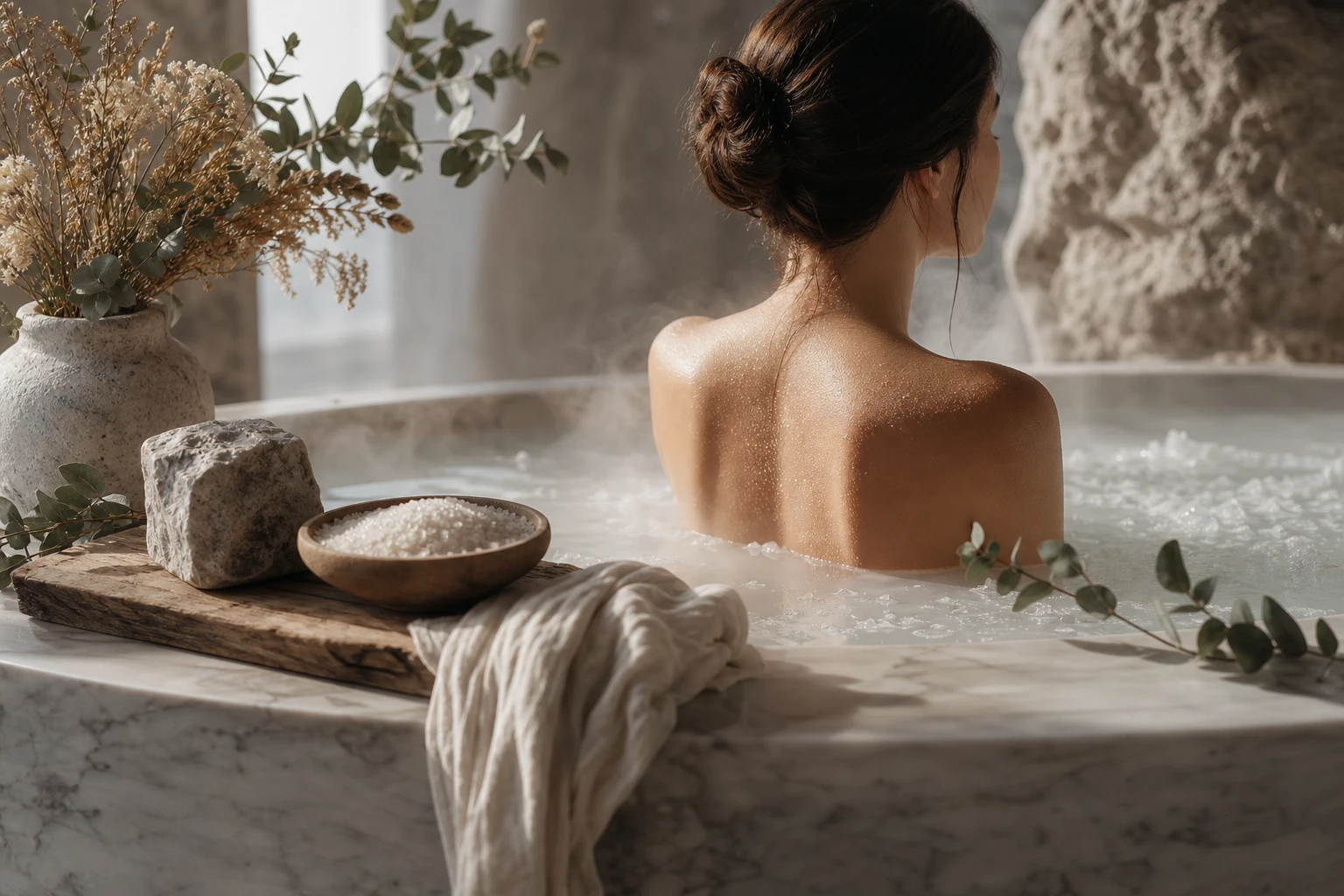
1. Fill your tub with warm water. You want comfortable warmth — somewhere around 92°F to 100°F (33°C to 38°C). Warm enough to loosen up tight muscles, but not so hot that you're ready to climb out after five minutes. I've made the "too hot" mistake more times than I'd like to admit.
2. Add the Epsom salt while the water is still running. This is key. The flowing water helps dissolve the crystals evenly throughout the tub. If you dump it in after the tub is already full, you'll end up sitting on a layer of gritty, undissolved salt. Not fun.
3. Swirl the water around with your hand. Make sure everything is fully dissolved before you get in. You want those minerals evenly dispersed for a proper soak.
4. Soak for 12 to 20 minutes. This is the sweet spot that keeps coming up in recommendations. Under 12 minutes and you're probably not giving your body enough time to benefit. Over 20 and your skin may start to feel tight and dried out, especially if you're prone to sensitivity.
5. Rinse off if needed. Some people feel perfectly fine stepping out and toweling off. Others notice their skin feels a bit filmy or dry. If that's you, a quick rinse with clean water solves it.
6. Drink water. Seriously. Warm baths make you sweat more than you realize. A glass of water before or right after your soak keeps you from getting dehydrated and headache-y.
What About Adding Other Things?
Totally fine. Lots of people like to enhance the experience with extras:
- Essential oils — lavender is the classic choice for relaxation, eucalyptus is great when you're congested. Five to ten drops is plenty.
- Baking soda — about half a cup. It softens the water and can help neutralize skin irritation.
- Coconut oil — a tablespoon adds moisture, but fair warning: the tub gets slippery. Be careful getting out.
These additions can complement the dissolved minerals bathing experience nicely, but they're not required. Plain Epsom salt in warm water does the job on its own.
What Are the Actual Benefits?
Here's where I want to be real with you, because there's a lot of exaggeration floating around online. Let me separate what's well-supported from what's... wishful thinking.
What the Evidence Supports
Muscle relaxation. This is probably the biggest draw, and it holds up. Warm water on its own helps relax tense muscles — that's basic physiology. Adding magnesium, which is directly involved in how muscles contract and release, takes it a step further. There's a reason athletes and people with physical jobs have relied on the muscle relaxation bath for decades. It works.
Stress relief. Partly the warm water, partly the ritual, and possibly partly the magnesium. Low magnesium levels have been linked to heightened stress and anxiety responses. Even if the absorption through skin is modest, the whole experience of soaking in a warm, quiet bath genuinely helps most people decompress.
Reduced post-exercise soreness. One of the most commonly reported bath salt benefits. The combination of heat and minerals may help dial down delayed-onset muscle soreness (DOMS). I started doing this after longer runs and noticed a real difference the next morning.
Softer skin. The mineral-rich water can gently exfoliate dead skin cells and leave everything feeling smoother. Nothing dramatic, but noticeable.
What's Overhyped
Detoxification. I see this claim constantly, and it bugs me. Your liver and kidneys handle detox. A bath — no matter how many minerals are dissolved in it — is not pulling heavy metals or toxins out through your pores. That's just not how your body works.
Curing medical conditions. Epsom salt baths are a wellness practice. They can complement your health routine and make you feel better. They are not replacing medication, physical therapy, or a doctor's advice. Please don't skip your meds because someone on the internet told you to take more baths.
Significant magnesium absorption. There's a widely cited 2004 study from the University of Birmingham that found magnesium levels rose after Epsom salt baths. It gets referenced everywhere. But the study was small, and the results haven't been robustly replicated since. Some absorption probably happens, but don't count on a bath to fix a genuine magnesium deficiency. Eat your leafy greens, nuts, and seeds too.
Who Should Be Careful?
Epsom salt baths are safe for the vast majority of people, but a few groups should pause and think before jumping in.
People with kidney disease. Your kidneys regulate magnesium levels in your blood. If they're not functioning well, even external magnesium exposure could theoretically become a concern. Check with your doctor first.
Diabetics. The bigger issue here is actually the heat, not the salt. Hot baths can affect blood sugar and blood pressure. Keep the water warm rather than hot, and monitor how you feel.
Pregnant women. Warm Epsom salt baths are generally considered fine during pregnancy, but "warm" is the keyword — not hot. Overheating during pregnancy carries real risks. Always check with your OB-GYN.
People with open wounds or severe skin conditions. Magnesium sulfate stings on broken skin. Just wait until things have healed up.
Children. Use half the adult Epsom salt dosage, keep the water lukewarm, and supervise the entire time. Pretty standard kid-bath rules, really.
Frequently Asked Questions
Can I use Epsom salt every day?
You can, but most experts lean toward 2 to 3 times per week. Daily soaks may gradually dry out your skin, especially if you're not applying moisturizer afterward. Pay attention to how your skin responds and adjust from there.
Can I use Epsom salt in a hot tub or jetted tub?
Check your manufacturer's guidelines before you do this. Some jetted systems can be corroded or clogged by dissolved minerals over time. In a standard, non-jetted bathtub, you're completely fine.
What happens if I use too much?
Honestly, nothing scary. Your skin might feel drier than usual, and the excess that didn't dissolve will just sit at the bottom of the tub. It's more wasteful than dangerous. Stick to the recommended Epsom salt dosage and save your money.
Can Epsom salt baths help with sleep?
A lot of people find that a warm bath taken 60 to 90 minutes before bed noticeably improves sleep quality. The drop in body temperature after you get out signals to your brain that it's time to wind down. The magnesium may play a role too, since it's involved in regulating neurotransmitters tied to sleep. It's not a guaranteed fix for insomnia, but it's a pleasant, low-risk habit worth trying.
Is Epsom salt the same as the bath salts sold at beauty stores?
Not necessarily. Many commercial bath salts use sea salt or Himalayan pink salt as a base, with added fragrances, colors, and sometimes moisturizers. These products are lovely for a sensory experience, but if you specifically want the benefits of a magnesium sulfate soak, read the ingredients list and confirm that's what you're actually buying.