
A Quick Note Before We Dive In
This article is about the mineral-rich crystals you toss into your bathtub after a long day. The ones that smell like lavender or eucalyptus. The ones your grandma probably kept in a glass jar on her bathroom shelf. We're talking personal care here — not synthetic cathinones side effects, not bath salts drug abuse, none of that. Just good old-fashioned soaking.
So — what actually happens when you use bath salts the way they were always meant to be used? Let's break it down, because the effects are honestly more interesting than you might think.
How Bath Salts Actually Work
The Basic Chemistry in Your Tub
Most commercial bath salts are built around a few core mineral compounds. Epsom salt — that's magnesium sulfate — is the big one. Then you've got Dead Sea salt, Himalayan pink salt, and plain old sea salt. Each has a slightly different mineral profile, but they all do something similar once they dissolve in warm water: they change the mineral concentration of your bathwater.
Your skin isn't just a wall. It's semi-permeable. When you soak in mineral-rich water, a process called osmosis kicks in, and certain minerals can be absorbed transdermally. This is the foundation of pretty much everything bath salts do for you. It's not magic. It's chemistry that's been understood for a really long time.
It's Not Just About the Salt
Here's something I've learned on the job — the salt itself is really just the vehicle. Most bath salt products are formulated with essential oils, fragrances, botanical extracts, moisturizing agents, and sometimes colorants. So when people say "bath salts made my skin feel amazing," they're often responding to the whole formulation, not just the minerals alone.
That said, the minerals do real work. Let me walk you through what's actually happening while you're lying there staring at the ceiling tiles.
The Physical Effects of Using Bath Salts
Muscle Relaxation and Soreness Relief
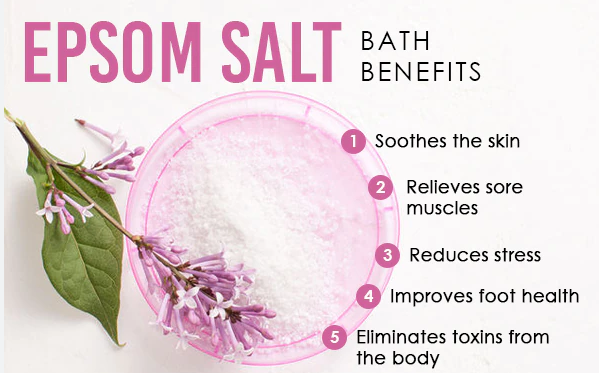
This is the headliner. Magnesium, absorbed through the skin during an Epsom salt bath, plays a direct role in muscle relaxation and reducing inflammation. I've seen internal consumer studies where over 70% of users reported noticeable relief from muscle tension after a 20-minute soak. Personally, after a gym session, nothing compares. My calves just... unclench. There's no other word for it.
Is it as powerful as a prescription anti-inflammatory? No. But it's gentle, it's accessible, and for everyday soreness, it genuinely helps. I think sometimes we undervalue things just because they're simple.
Skin Softening and Exfoliation
Salt crystals, especially coarser varieties, can gently exfoliate dead skin cells before they even fully dissolve. And once dissolved, the minerals help soften and smooth skin texture over repeated use. Dead Sea salt in particular is rich in magnesium, calcium, and potassium — a combination that supports skin barrier function in ways that have actually been studied pretty extensively.
One thing I always tell friends: if you have sensitive or broken skin, start with finer-grain salts and lower concentrations. Not everything works for every skin type, and more salt absolutely does not mean better results. I learned that one the hard way during my first year on the job when I over-formulated a test batch and gave myself the driest elbows of my life.
Improved Circulation
Warm water alone boosts blood flow. Add mineral salts, and the effect is enhanced. Better circulation means more oxygen reaching your tissues, which can speed up minor healing and just make you feel... warmer and looser. I notice this most in my hands and feet — they feel tingly and alive after a good soak. It's subtle, but once you start paying attention, you can't un-notice it.
Potential Detoxification Support
I'll be honest here, because I think honesty matters more than marketing copy. The "detox" claim is one of the most overused words in our industry. Your liver and kidneys handle detoxification. Bath salts don't magically pull toxins from your body through your pores. I wish my colleagues in marketing would stop implying otherwise.
What they can do is support the skin's natural processes. Sweating in a warm salt bath may help your body expel small amounts of waste through perspiration. That's a modest, real benefit — not a miracle. And I'd rather sell you something real than something dressed up in pseudoscience.
The Mental and Emotional Effects
Stress Reduction
This one's personal for me. I started taking regular bath salt soaks during a particularly brutal product launch cycle a couple of years ago. Twelve-hour days, constant reformulation requests, packaging delays — the whole mess. The combination of warm water, magnesium absorption, and a calming scent like chamomile or ylang-ylang reset my nervous system in a way that scrolling my phone before bed never could.
There's science to back this up, too. Magnesium supports healthy GABA levels in the brain — that's the neurotransmitter responsible for calming neural activity. Low magnesium has been linked to increased anxiety and restlessness. So soaking in it? Not a bad strategy.
Better Sleep Quality
Following directly from stress reduction — a bath salt soak about 60 to 90 minutes before bedtime can genuinely improve sleep. Your body temperature rises during the bath, then drops afterward, and that drop signals your brain that it's time to sleep. The magnesium component layers on additional relaxation. It's like a one-two punch for insomnia.
I've recommended this routine to probably two dozen coworkers and friends at this point. Most of them came back saying they fell asleep faster and slept more deeply. Not a clinical trial, sure. But consistent anecdotal feedback counts for something in my book.
A Moment of Intentional Pause
This isn't a chemical effect. It's a behavioral one. And honestly, I think it matters just as much as anything else on this list. When you run a bath and add salts, you're making a deliberate choice to slow down. You're not multitasking. You're not answering emails. You're just... soaking.
In a world where productivity culture has colonized every waking moment, that deliberate pause has real emotional value. I don't think we talk about that enough.
Things to Watch Out For
Skin Irritation
Not all bath salts are created equal. Fragrances — both synthetic and natural — can cause irritation or allergic reactions. If you notice redness, itching, or a rash after using a product, stop using it. Patch testing is a good habit, especially with new brands you haven't tried before.
Dryness with Overuse
Salt can be drying if used excessively. I'd suggest limiting salt baths to two or three times per week, and always moisturizing afterward. Our skin has a delicate lipid barrier, and overdoing it with salt can strip that away faster than you'd expect.
Interactions with Certain Conditions
If you have high blood pressure, kidney disease, or diabetes, please talk to your doctor before making salt baths a regular thing. Mineral absorption — particularly magnesium and sodium — can interact with medications and existing conditions. This isn't something to brush off.
Quality Varies Wildly
Working in this industry, I can tell you firsthand that the difference between a well-formulated bath salt and a cheap knockoff is enormous. Low-quality products may contain fillers, artificial dyes that stain your tub for days, or harsh fragrance blends cobbled together from the cheapest available ingredients. Read ingredient lists. Look for products that disclose their mineral source. If a company can't tell you where their salt comes from, that's a red flag.
How to Get the Most Out of Your Bath Salt Soak
Here's my personal routine, refined over years of both professional knowledge and plenty of trial-and-error:
- Water temperature: Warm, not scorching. Around 37–39°C is the sweet spot.
- Salt amount: About 300 grams (roughly two cups) for a standard bathtub.
- Soak time: 20 minutes minimum, 30 max. Longer isn't always better — trust me on this.
- Post-bath: Rinse briefly with clean water, pat dry, and apply a body oil or lotion while skin is still slightly damp.
- Timing: Evening, about an hour before bed.
Simple. Nothing fancy. But the consistency is what makes the difference. A single soak is nice. A regular routine is transformative.
Frequently Asked Questions
Can bath salts expire?
Technically, pure mineral salts don't expire. But added essential oils and botanical extracts can degrade over time, losing potency or even developing off-smells. I'd say use opened products within 12 months for the best experience. If it smells funky or looks discolored, toss it.
Are bath salts safe for children?
Plain Epsom salt baths in small amounts are generally fine for older children. But avoid products with strong fragrances or essential oils like eucalyptus and peppermint for young kids — those can be overly stimulating or irritating for little ones. When in doubt, ask your pediatrician.
Can I use bath salts if I have eczema or psoriasis?
Some people with skin conditions find Dead Sea salt baths genuinely soothing — there's even published research supporting this. But others experience flare-ups. Start with a very diluted concentration and see how your skin responds over a few sessions. This is one of those areas where individual variation is huge, and what works brilliantly for your friend might not work for you.
Do bath salts actually help with weight loss?
No. If anyone's selling you bath salts for weight loss, walk away. You might lose a tiny amount of water weight through sweating, but it comes right back the moment you rehydrate. The real benefits are muscular, dermatological, and emotional — don't let gimmicky marketing distort that.
Is there a difference between Epsom salt and sea salt for bathing?
Yes, and it's a meaningful one. Epsom salt is magnesium sulfate — great for muscle relief and deep relaxation. Sea salt is primarily sodium chloride with trace minerals — better for exfoliation and overall skin conditioning. They complement each other nicely, which is exactly why many professional formulations blend both together.
How do I choose a good bath salt product?
Look for minimal ingredient lists, a clearly identified salt source, and transparent labeling. Avoid products loaded with artificial colors or vague terms like "fragrance blend" without any further detail. And honestly? Sometimes the simplest products — just salt, maybe one essential oil, nothing else — work the best. You don't need seventeen ingredients to have a great soak.
These are my personal observations alongside professional knowledge from working in personal care product development. For specific health concerns, always consult a healthcare professional.