
You drop it in the tub. It hisses, spins, and erupts into a cloud of color. Thirty seconds later, your bathwater looks like a sunset and smells like a spa. But what just happened? What's actually inside that dense little sphere causing all that drama?
Bath bombs have evolved from quirky DIY projects into a global industry worth billions. Yet most of us toss them in without a second thought about the ingredients. That changes today. Let's pull one apart — ingredient by ingredient — and talk about what each component does, why it's there, and whether any of it should concern you.
The Two Ingredients That Make It All Fizz
Sodium Bicarbonate (Baking Soda)
Every single bath bomb starts here. Sodium bicarbonate — the same stuff sitting in your fridge absorbing odors — is the foundation. It's an alkaline compound, and that matters because it needs something acidic to react with. On its own in water, it just dissolves quietly. Pair it with an acid, though, and you get that signature eruption of carbon dioxide bubbles.
Beyond the fizz, baking soda softens water. It neutralizes some of the minerals that make tap water feel "hard," leaving your skin feeling smoother after you soak. It's gentle, widely available, and cheap — which is why it makes up the largest portion of any bath bomb recipe.
Citric Acid
Here's the other half of the equation. Citric acid occurs naturally in lemons, oranges, and other citrus fruits, though the version used in bath bombs is typically manufactured through fermentation. When it meets sodium bicarbonate in water, the two react instantly. The acid donates a hydrogen ion, the base accepts it, and carbon dioxide gas rushes out. That's your fizz.
The typical ratio is roughly 2 parts baking soda to 1 part citric acid. Shift that balance and you change the experience — more citric acid means a faster, more aggressive fizz. Less means a slower, gentler dissolve. Formulators play with this ratio constantly to control how long the show lasts.
What Gives Bath Bombs Their Color, Scent, and Shape
Essential Oils and Fragrance Oils
A bath bomb without scent is just a fizzy rock. Fragrance is half the appeal, and makers have two routes: essential oils or synthetic fragrance oils.
Essential oils are distilled directly from plants. Lavender, eucalyptus, peppermint, and tea tree are popular picks because they smell great and carry perceived therapeutic benefits. They're pricier, and their scent can be subtler in water.
Synthetic fragrance oils are lab-created blends designed to mimic or invent scents. They're stronger, more consistent, and far cheaper. Most mass-produced bath bombs use these. Neither option is inherently "bad" — it depends on your skin sensitivity and personal preference. A typical bath bomb uses somewhere between 1-3% fragrance by total weight. More than that and you risk irritation.
Colorants and Dyes
That vivid swirl of purple or electric blue? It comes from one of three sources: food-grade dyes (like the kind in cake frosting), cosmetic-grade pigments (FD&C or D&C rated), or micas (mineral-based shimmers).
The big question everyone asks: will it stain my tub? Generally, no — if the maker used water-soluble dyes at appropriate concentrations. Micas and pigments can occasionally leave residue on older or porous tub surfaces, but a quick rinse usually handles it. If you've got a brand-new acrylic tub, you're almost certainly fine. Older porcelain with worn enamel? Maybe test a corner first.
Binding Agents and Moisturizers
A bath bomb needs to hold its shape. It also needs to feel like more than just a science experiment. That's where oils and butters come in — they serve double duty as structural binders and skin conditioners.
Coconut oil is the most common choice. Shea butter and cocoa butter show up in premium formulas, adding richness and a silkier feel to the water. Some makers use witch hazel spritzed lightly over the dry mix as a binding agent — just enough moisture to help everything compact without triggering the fizz prematurely.
This is actually the trickiest part of making bath bombs. Add too much liquid and the reaction starts in the bowl. The mixture puffs up, refuses to hold shape, and you're left with a crumbly mess. It's a balancing act every time.
Bonus Ingredients That Set Premium Bath Bombs Apart
Epsom Salt and Sea Salt
Epsom salt (magnesium sulfate) is a classic bath soak ingredient on its own. In bath bombs, it adds a therapeutic angle — the idea being that magnesium absorbs through skin and helps relax sore muscles. The science on transdermal magnesium absorption is still debated, but plenty of people swear by the relief they feel. At minimum, the salt adds texture and weight to the bomb.
Sea salt contributes trace minerals and a slightly different dissolve pattern. Some makers use pink Himalayan salt for visual appeal as much as anything else.
Dried Botanicals and Extras
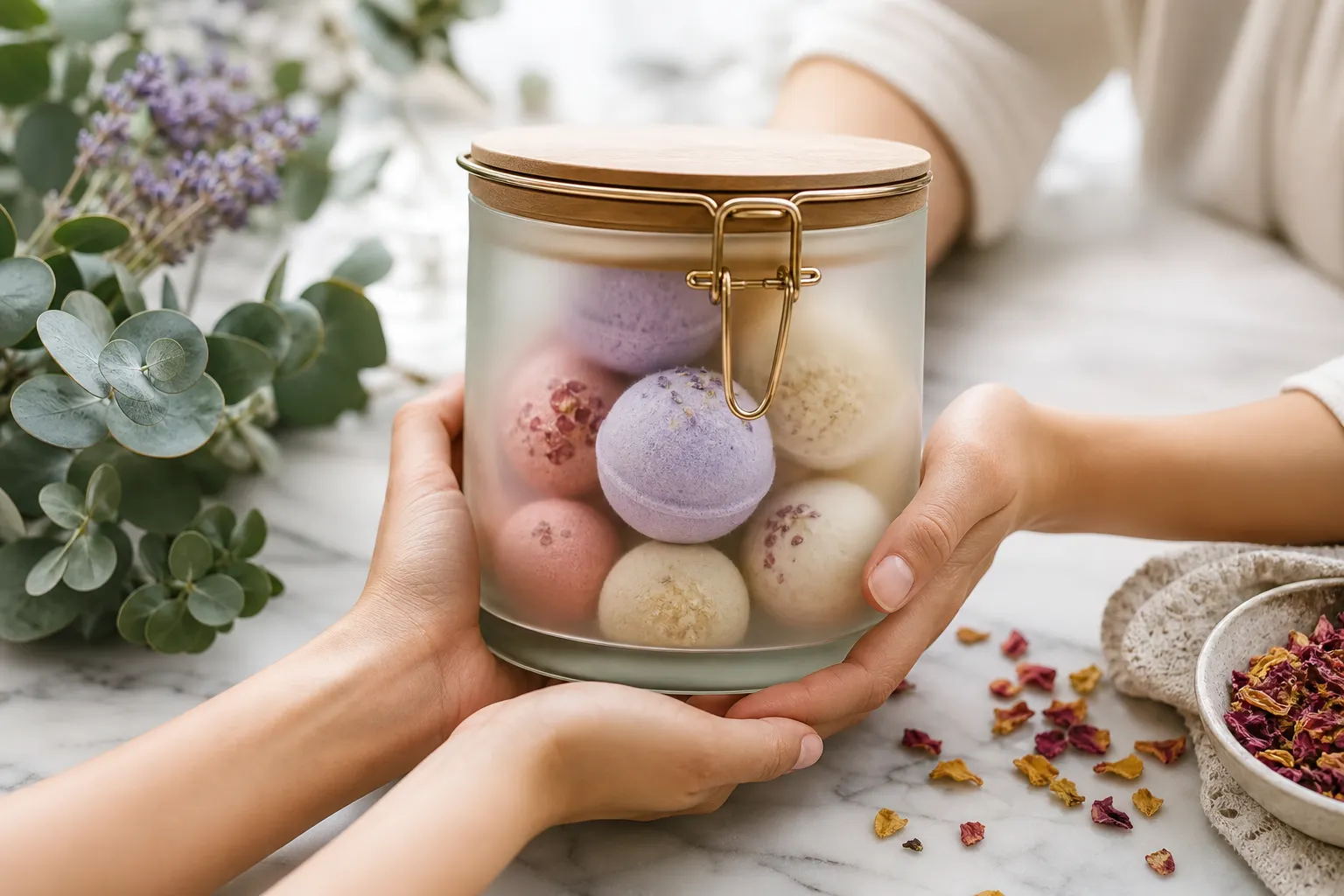
Rose petals pressed into the surface. Dried lavender buds scattered through the mix. Oatmeal blended in for sensitive skin. These extras are partly aesthetic, partly functional. Oatmeal genuinely soothes irritation. Flower petals mostly look pretty — and then clog your drain if you're not careful (more on that later).
Glitter is polarizing. Traditional craft glitter is microplastic, and it's terrible for waterways. Responsible makers now use biodegradable alternatives made from plant cellulose or synthetic mica. Always check the label if this matters to you.
Then there are the novelty additions — hidden toy figurines for kids, rings, rolled-up messages. Fun, but they don't change the bathing experience itself.
Clays and Specialty Powders
Kaolin clay shows up in higher-end formulas. It creates a silkier water texture and helps the bomb hold together without excess oil. Cornstarch does something similar — it slows the fizzing reaction slightly and makes the water feel softer against skin.
Milk powders (coconut milk, goat milk, buttermilk) are another premium addition. They dissolve into the water and leave a genuinely noticeable softness. If you've ever used a milk bath product, you know the feeling.
How These Ingredients Come Together
The process is simpler than you'd think, but the execution requires care. Dry ingredients — sodium bicarbonate, citric acid, cornstarch, clays, salts — get whisked together in one bowl. Wet ingredients — melted oils, fragrance, colorant — get combined separately.
Then comes the critical moment. You add wet to dry, slowly, mixing constantly. Go too fast or add too much liquid at once, and the citric acid reacts with any available moisture. The batch starts fizzing on the table. Experienced makers work quickly, sometimes in low-humidity environments, to avoid premature activation.
Once mixed, the damp powder gets packed tightly into molds — usually spherical, but hearts, stars, donuts, and skulls are all fair game. Then it dries. Handmade bombs typically cure for 24-48 hours. Factory-made versions may use heat or dehumidifiers to speed this up.
The difference between a handmade bomb and a factory one often comes down to ingredient quality and compression. Mass-produced bombs are sometimes packed so tightly they sink and fizz slowly. Artisan ones tend to be lighter, fizzier, and made with better oils.
Are Bath Bomb Ingredients Safe?
For most people, yes. The core bath fizzy ingredients — baking soda and citric acid — are food-grade compounds. They're not going to harm healthy skin.
The potential irritants are the extras. Synthetic fragrances are the most common culprit for reactions — redness, itching, or irritation, especially in sensitive areas. Dyes can occasionally cause issues for people with specific sensitivities. Non-biodegradable glitter is an environmental concern more than a health one, but it's worth noting.
For people with sensitive skin or conditions like eczema, unscented and dye-free options exist. Look for short ingredient lists with recognizable components. If a label reads like a chemistry textbook, that's not necessarily bad — but if you can't identify what half the ingredients are, maybe skip it.
The UTI question comes up a lot. Bath bombs can alter the pH of bathwater, and fragrances or dyes may irritate sensitive tissue. There's no large-scale clinical evidence directly linking bath bombs to urinary tract infections, but gynecologists generally recommend that people prone to UTIs avoid heavily fragranced bath products. Common sense applies here.
The Takeaway
At its core, a bath bomb is simple chemistry — an acid meets a base, gas escapes, and everything else is decoration. But those "decorations" matter. The oils nourish your skin. The scents shift your mood. The colors turn a Tuesday night bath into something that feels intentional.
Now that you know what's inside, you can shop smarter. Check ingredient lists. Favor shorter ones with components you recognize. Match the formula to your skin's needs — more butter for dry skin, fewer fragrances for sensitive skin, Epsom salt for sore muscles. Knowing what's in the bomb doesn't ruin the magic. It just means you're choosing the right kind of magic for you.
Frequently Asked Questions
Are bath bombs safe for kids?
Most bath bombs are fine for children over three, but choose fragrance-free or lightly scented options. Avoid bombs with small hidden objects for very young kids due to choking hazards. Dye-free versions are gentler on sensitive young skin.
Can bath bomb ingredients clog my drain?
The fizzing ingredients dissolve completely and won't cause issues. However, dried flower petals, large salt chunks, and glitter can accumulate over time. Use a drain catch if your bomb contains botanicals or solid extras.
Do bath bombs expire?
They don't spoil in a dangerous way, but they lose potency. Citric acid absorbs moisture from the air over time, which slowly depletes the fizzing reaction. Most bombs are best used within six months to a year. Old ones still work — they just fizz less dramatically.
Are bath fizzy ingredients the same as shower steamer ingredients?
The core chemistry is identical — sodium bicarbonate plus citric acid. Shower steamers typically use less oil (since you're not soaking in them) and higher fragrance concentrations to project scent in steam. They're also often made harder so they dissolve slowly on the shower floor.
Can I use a bath bomb if I have sensitive skin or eczema?
Yes, but choose carefully. Look for bombs free of synthetic fragrance, artificial dyes, and glitter. Oatmeal-based or plain Epsom salt bombs tend to be the gentlest options. Patch-test if you're unsure — dissolve a small piece in a bowl and apply the water to your inner arm first.
What makes a bath bomb float vs. sink?
Density. Bombs with more oils and butters, or those packed loosely, tend to float because the fats are lighter than water. Tightly compressed bombs with heavy salts and minimal oil usually sink. Floating bombs fizz at the surface and create more visual drama. Sinking ones release color from the bottom up.