
So you just found a stash of bath bombs shoved in the back of your bathroom cabinet. Maybe they were a holiday gift from two years ago. Maybe you went on a buying spree and forgot about half of them. Either way, you're staring at them and wondering: are these still good?
Fair question. And the answer is a little more nuanced than a simple yes or no. Let's break the whole thing down — what actually happens inside a bath bomb over time, how long they really last, and what to do when you're not sure.
What Happens to a Bath Bomb Over Time
The Short Answer: Yes, But It's Complicated
Bath bombs don't "expire" the way a carton of milk does. You're not going to open one up and find mold growing on it (well, almost never — more on that later). There's no ticking clock that turns them dangerous overnight.
What does happen is a slow decline. The fizz gets weaker. The scent fades to almost nothing. The colors go flat. It's less about safety and more about whether you're actually getting the experience you paid for. A bath bomb that just sinks and sits there like a sad rock? That's not really doing its job anymore.
Why Bath Bombs Lose Their Magic
Here's the thing most people don't realize: the fizzy reaction you love is a chemical reaction between citric acid and baking soda. Those two ingredients are just waiting to meet water. But here's the catch — they don't need a whole bathtub of water. Even the moisture floating around in your bathroom air is enough to slowly kick-start that reaction.
So every day your bath bomb sits unwrapped on a shelf, it's losing a tiny bit of its fizzing power. It's being used up before it ever hits the tub.
On top of that, essential oils and fragrance oils are volatile compounds. That's a chemistry term meaning they evaporate easily, even from a solid. Your lavender bath bomb that smelled incredible six months ago? The scent molecules have been quietly escaping into the air this whole time. And natural colorants like beetroot powder or turmeric break down faster than their synthetic counterparts, so colors fade unevenly too.
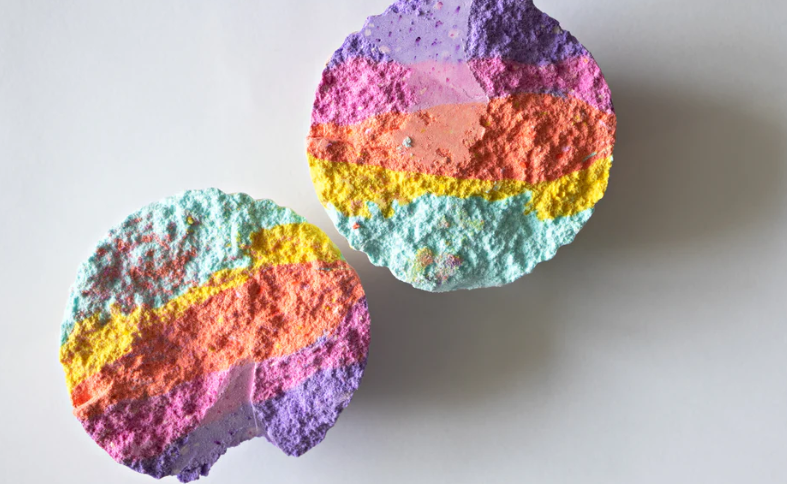
Bath Bomb Shelf Life: What to Realistically Expect
Store-Bought vs. Handmade — A Big Difference
Not all bath bombs are created equal when it comes to longevity. Commercial options typically have a shelf life of 12 to 24 months if they're still sealed. They're formulated with shelf stability in mind, packaged in materials that block moisture, and sometimes include mild preservatives.
Handmade or artisan bath bombs? You're looking at more like 6 to 12 months, sometimes even less. Small-batch makers often use fresher, more natural ingredients — which sounds great and often is great — but those ingredients don't hold up as long. The packaging might just be tissue paper and a sticker. No shade to indie makers, but it's worth knowing the trade-off.
Ingredients That Shorten the Clock
Some additions dramatically cut into how long a bath bomb stays fresh:
- Fresh botanicals — Those pretty dried flower petals and herb bits? They can trap moisture and, in rare cases, even develop mildew.
- Coconut oil or shea butter — Both can go rancid, especially if stored somewhere warm. You'll know by the smell.
- Milk powders or honey — Organic content means a shorter window before things start to turn.
- CBD or specialty oils — The potency degrades over time. You might still get the fizz, but you're not getting the therapeutic benefit you were after.
Ingredients That Hold Up Well
On the flip side, some bath bomb ingredients are remarkably stable. Pure baking soda and citric acid — the backbone of any bath bomb — last a very long time when kept dry. Epsom salts are basically indestructible. Synthetic fragrances and mica-based colorants hold their properties far longer than natural alternatives. So a simple, no-frills bath bomb will outlast a fancy one loaded with botanicals almost every time.
How to Tell If Your Bath Bomb Has Gone Bad
The Fizz Test
This one's easy and honestly kind of fun. Break off a small chunk and drop it into a glass of water. A fresh bath bomb should erupt with vigorous bubbling within seconds. If it just... sits there, or produces a few half-hearted bubbles, it's past its prime. Still usable, but don't expect the dramatic bathtub volcano effect.
Trust Your Nose
A faded scent is one thing — your bath bomb is old but probably harmless. An off-putting smell is something else entirely. If you catch anything sour, musty, or rancid, especially from a bomb that contains oils or butters, toss it. Your nose is a surprisingly good quality control tool here. Don't overthink it. If it smells wrong, it is wrong.
Visual and Texture Clues
A few things to look for:
- Crumbling or cracking — Moisture has already gotten in and started the fizzing reaction prematurely. The structural integrity is gone.
- White powdery film — This is just baking soda migrating to the surface. Not harmful, but a sign of age.
- Faded or bleeding colors — Purely cosmetic. Won't hurt you, but the bath water won't be that gorgeous jewel tone you were hoping for.
- Visible mold or dark spots — Rare, but it happens with botanical ingredients. Throw it away immediately. No debate.
Are Expired Bath Bombs Safe to Use?
For Most People, Yes — With Caveats
Let's be real: an old bath bomb that's lost its fizz is essentially a scented lump of baking soda. It's not going to poison you. The bath bomb expiration date printed on packaging is about quality, not safety. Baking soda and citric acid don't become toxic as they age. They just become... less exciting.
So if you toss an old one into the tub and it barely fizzes, the worst thing that happens is a mildly disappointing bath. You'll still get some skin-softening benefits from the baking soda residue.
When You Should Actually Worry
That said, there are a few situations where I'd say skip it:
- Sensitive skin or eczema — Rancid oils can absolutely trigger irritation or full-on flare-ups. Not worth the risk.
- Yeast infection concerns — Degraded ingredients can shift the pH balance of your bathwater in unpredictable ways. If you're prone to infections, use fresh products.
- Known allergies — As ingredients break down, their chemical profiles shift slightly. Something that didn't bother you when the bomb was fresh might cause a reaction now.
- Children's baths — Kids have more sensitive skin than adults. Err on the side of caution and use something you know is fresh.
How to Store Bath Bombs Properly (And Actually Make Them Last)
The Enemies: Moisture, Heat, and Light
Here's the irony that kills me every time: most people store bath bombs in the bathroom. It makes sense, right? That's where the tub is. But the bathroom is literally the worst room in your house for bath bomb storage. All that steam from showers, the humidity from running water — it's slowly destroying your bath bombs every single day.
A cool, dry closet or bedroom drawer is a much better choice. I know it's less convenient. But your bath bombs will actually work when you want them to.
Wrapping and Containment
Keep bath bombs in their original shrink wrap until you're ready to use them. If they came unwrapped (as many handmade ones do), throw them in an airtight container or a ziplock bag with the air squeezed out. Cheap, simple, effective.
One pro tip I picked up from a candle maker, of all people: toss a silica gel packet into whatever container you're using. Those little packets that come in shoe boxes and vitamin bottles absorb ambient moisture beautifully. Save a few and repurpose them for bath bomb storage.
Temperature Matters More Than You Think
Anything above about 80°F (27°C) starts causing problems. Oils can soften or melt, ingredients react faster, and fragrances evaporate at an accelerated rate. You don't need to refrigerate your bath bombs — that can actually introduce condensation if you're not careful — but keep them away from heat sources and direct sunlight. UV light breaks down both color and fragrance surprisingly fast.
Buying Smart
A few things to think about before you even bring bath bombs home:
- Check for a manufacture date or "best by" date on the packaging.
- Avoid grabbing bath bombs from clearance bins at stores with questionable climate control. That bargain bin bomb might have been sitting in a hot stockroom for months.
- If you're ordering online during summer, consider what shipping in a hot truck does to the product. It's not always pretty.
What to Do With Old Bath Bombs (Don't Just Throw Them Away)
Got a bath bomb that's clearly seen better days? Before you toss it in the trash, consider a few alternative uses:
- Foot soak — Crumble it into a basin of warm water. You don't need fizz to get the soothing mineral benefits of baking soda and Epsom salts on tired feet.
- Drawer sachet — If there's still some scent hanging on, stick it (wrapped loosely) in a drawer or closet. Free air freshener.
- DIY scrub — Crush the bath bomb and mix it with coconut oil and sugar for a quick body scrub. The baking soda adds gentle exfoliation.
- Floor cleaner — Dissolve a crumbled bath bomb in warm water and use it for mopping. Baking soda is a genuinely good floor cleaner, and your house will smell nice. Weird tip, but it works.
FAQ
Can an old bath bomb give you a skin rash?
It's unlikely from the base ingredients alone — baking soda and citric acid don't become irritants as they age. However, if the bomb contains oils that have gone rancid or botanical ingredients that have degraded, skin irritation is definitely possible. People with sensitive skin should be especially cautious.
Do bath bombs expire if they're still wrapped in plastic?
They last significantly longer when sealed, but they're not immortal. The ingredients still age internally. A well-sealed bath bomb can stay effective for up to two years under ideal storage conditions, but even plastic wrap isn't perfectly airtight. Time still wins eventually.
Is it okay to use a bath bomb that doesn't fizz anymore?
Totally fine from a safety standpoint. You'll still get some skin-softening benefits from the baking soda and whatever oils are present. You just won't get the show — and let's be honest, the fizz is at least half the point of using a bath bomb in the first place.
How can I tell the bath bomb expiration date if there's no label?
You can't pinpoint an exact date without a label. Your best bet is to rely on the fizz test, smell test, and visual inspection described above. If you genuinely can't remember when you bought it and it smells off or refuses to fizz, it's time to let it go. No bath bomb is worth a gamble.
Should I refrigerate bath bombs?
Not necessary for the vast majority of bath bombs. A cool, dry, dark storage spot works perfectly well. Refrigeration can actually backfire — pulling a cold bath bomb into a warm, humid bathroom creates condensation on the surface, which triggers the fizzing reaction before you're ready. Just keep them sealed and stashed somewhere sensible.