
If you landed here looking for a fast answer, I'll give it to you straight before we get into the weeds. I've been formulating and producing shower steamers for over a decade, and after watching millions of these little fizzy tablets leave my workshop, I've learned exactly what makes them sing — and what makes them go flat.
Quick Answer: The 5 Things That Actually Make Shower Steamers Last Longer
Here's the no-fluff version. Do these five things and your steamers will outlast almost anyone else's:
Keep them completely dry until the moment you use them.
Store them in an airtight container (mason jar, mylar bag, or sealed tin).
Use only a half or quarter at a time by pre-cutting before storage.
Place them away from the direct water stream — let mist hit them, not a torrent.
Refresh fading steamers with 2–4 drops of essential oil right before stepping in.
1. Keep Them Completely Dry Until Use
Moisture is enemy number one. Even ambient bathroom humidity is enough to start a slow reaction between the baking soda and citric acid inside. I've seen perfectly good steamers turn into chalky bricks in two weeks just because someone left them on an open shelf next to the shower.
2. Store in an Airtight Container
A mason jar with a rubber-sealed lid, a resealable mylar bag, or a tin with a silicone gasket — any of these will dramatically extend shelf life. Open shelves and decorative baskets look pretty on Instagram, but they're a slow death sentence for aromatherapy tablets.
3. Use Only a Half or Quarter at a Time
Most people drop a whole steamer in and watch it dissolve in 45 seconds. Cut yours in half (or even quarters) with a sharp knife right after you receive them. One tablet can easily stretch to three or four showers.
4. Place Them Away From the Direct Water Stream
This single trick can extend release time by two to three times. The goal is steam contact, not waterboarding. Set the steamer on the far edge of the shower floor, on a soap dish, or tucked into a corner where only splash and mist reach it.
5. Refresh Fading Steamers With a Few Drops of Essential Oil
If a steamer has lost its top notes after a few months in storage, don't toss it. Add two to four drops of the matching essential oil directly on top about 30 seconds before use. The heat and steam will release the aroma like it's brand new.
Why Shower Steamers Lose Their Punch (From Someone Who's Made Millions of Them)
To really preserve essential oils in shower steamers, it helps to understand what's actually happening inside that little white disc on your shelf.
The Essential Oil Evaporation Problem
Essential oils are volatile by nature — that's literally what makes them smell. The top notes (citrus, eucalyptus, peppermint) start escaping the moment a steamer is unwrapped, and they can even diffuse slowly through thin plastic wrap. Heavier base notes like cedarwood or patchouli hang on longer, which is why an old lavender steamer might smell more "woody" than floral after a year.
Baking Soda and Citric Acid: A Reactive Pair
These two ingredients are the engine of the fizz. They're stable when dry, but they'll start reacting with each other the moment they encounter moisture — even airborne humidity. A premature, slow-motion reaction during storage is what causes that powdery, dusty appearance on older steamers. By the time you use one, half the fizz is already spent.
Why Cheap Steamers Fade Faster Than Premium Ones
I'll be honest: not all steamers are built the same. Mass-market budget brands often skimp on essential oil load (sometimes under 1%), use cheaper fragrance oils that flash off quickly, and rush the curing process. A properly cured artisan steamer rests for 24–48 hours minimum before packaging, which locks in scent and structural integrity. A factory-pressed bargain steamer might be wrapped within minutes.
The Right Way to Store Shower Steamers for Maximum Shelf Life
Storing shower steamers airtight is the single biggest factor in extending their useful life. Here's exactly how I do it at home.
Airtight Storage: What Actually Works
Here's my honest ranking after years of testing:
Mason jars with rubber seals: Excellent airtight performance, lets you see what you have, dishwasher-safe. Downside: glass breaks.
Mylar bags (resealable): The gold standard for scent retention. Blocks light, air, and moisture. Downside: harder to organize visually.
Tins with silicone gaskets: Great middle ground, especially for travel. Downside: metal can sometimes interact with citrus oils over long periods.

Individual Wrapping vs. Bulk Storage
If you have several scents, wrap each one individually in plastic film or wax paper before bulk storing. Scents migrate — I once opened a jar where a lavender steamer had picked up eucalyptus notes from its neighbor. If they're all the same scent, bulk sealing is perfectly fine.
Ideal Temperature and Humidity Conditions
Aim for somewhere around 60–70°F (15–21°C) and under 50% relative humidity. A bedroom closet or linen cupboard is ideal. A bathroom cabinet — even a closed one — is the worst place possible because every hot shower spikes the room's humidity to 80%+.
Where NOT to Store Them
Open bathroom shelves (humidity)
Sunny windowsills (UV degrades essential oils)
On top of or near radiators (heat accelerates evaporation)
Inside the shower stall itself (the absolute worst — I've seen it)
In the car or garage where temperatures swing wildly
How to Use a Shower Steamer So It Lasts Through Multiple Showers
Usage technique is honestly half the battle. This is where most people lose 60% of their steamer's potential.
The "Splash Zone" Method
Put the steamer on the shower floor in a spot where water doesn't hit it directly, but steam and occasional splashes do. The corner opposite the showerhead is usually perfect. You want a slow, controlled fizz — not a foam explosion.
Using a Soap Dish or Steamer Holder
A small ceramic soap dish on the floor or a mesh bag hung from a hook can double or even triple your usage time. The mesh bag trick is my personal favorite — the steamer releases gradually as steam passes through, and you can pull it out the moment you're done, let it dry, and use it again.
Cutting Steamers Into Portions Before Storage
The day they arrive, I take a sharp paring knife and score each steamer into halves or quarters. Don't try to snap them with your hands — they'll crumble. A clean, firm press with a sharp blade gives you perfect portions. Store them back in the airtight container immediately.
Preventing Shower Steamers From Crumbling or Going Stale
These are the two most common complaints I hear, and both are completely solvable.
Why Steamers Crumble (and How to Prevent It)
Crumbling usually comes down to the binder. Makers use witch hazel or 90%+ isopropyl alcohol to bind the dry ingredients without triggering the fizz reaction. Too little binder and you get a crumbly mess; too much and the steamer reacts during curing. If yours arrive crumbly, store them in a sealed container — the trapped humidity will actually firm them up slightly over a few days.
Reviving Steamers That Have Lost Their Scent
This is my favorite trick to extend aromatherapy shower tablets: keep a small dropper bottle of your favorite essential oil next to your storage jar. Right before use, place 2–4 drops directly on the top of the steamer. The oil soaks in, then releases beautifully when steam hits.
Signs a Shower Steamer Has Gone Bad
Discoloration: Yellow or brown spots indicate oil oxidation.
Soft or sticky spots: Moisture has gotten in and reaction has started.
Faint or "off" smell: Aromatic compounds have degraded.
Visible moisture or weeping: Toss it. It's done.
A slightly faded scent is salvageable. A soft, weeping, discolored tablet is not.
How Long Do Shower Steamers Actually Last? The Honest Industry Answer
Shower steamer shelf life is one of the most misunderstood topics in the bath industry. Let me give you the real numbers.
Typical Shelf Life Ranges
| Type | Standard Storage | Optimal Storage |
|---|---|---|
| Handmade artisan | 6–12 months | Up to 18 months |
| Commercial / mass produced | 12–24 months | Up to 24+ months |
| DIY home-made | 3–6 months | 9–12 months |
The variation comes down to oil load, binder chemistry, and packaging quality.
How to Read or Estimate a Production Date
Most artisan makers won't print a date on the packaging, but reputable ones will tell you if you ask. Look for a batch code, lot number, or a "best used by" suggestion. If a seller can't answer when their product was made, that's a yellow flag — I'd buy a smaller quantity to test before committing to a big order.
A Few Insider Tips I Rarely Share Publicly
Buy in Smaller Batches, More Often
I know bulk feels economical, but I've watched too many customers buy 50 steamers in one go and end up tossing half. Buy 8–12 at a time, use them within 3–4 months, then restock. Fresher rotation always beats hoarding.
Pair Steamers With a Diffuser for Lighter Days
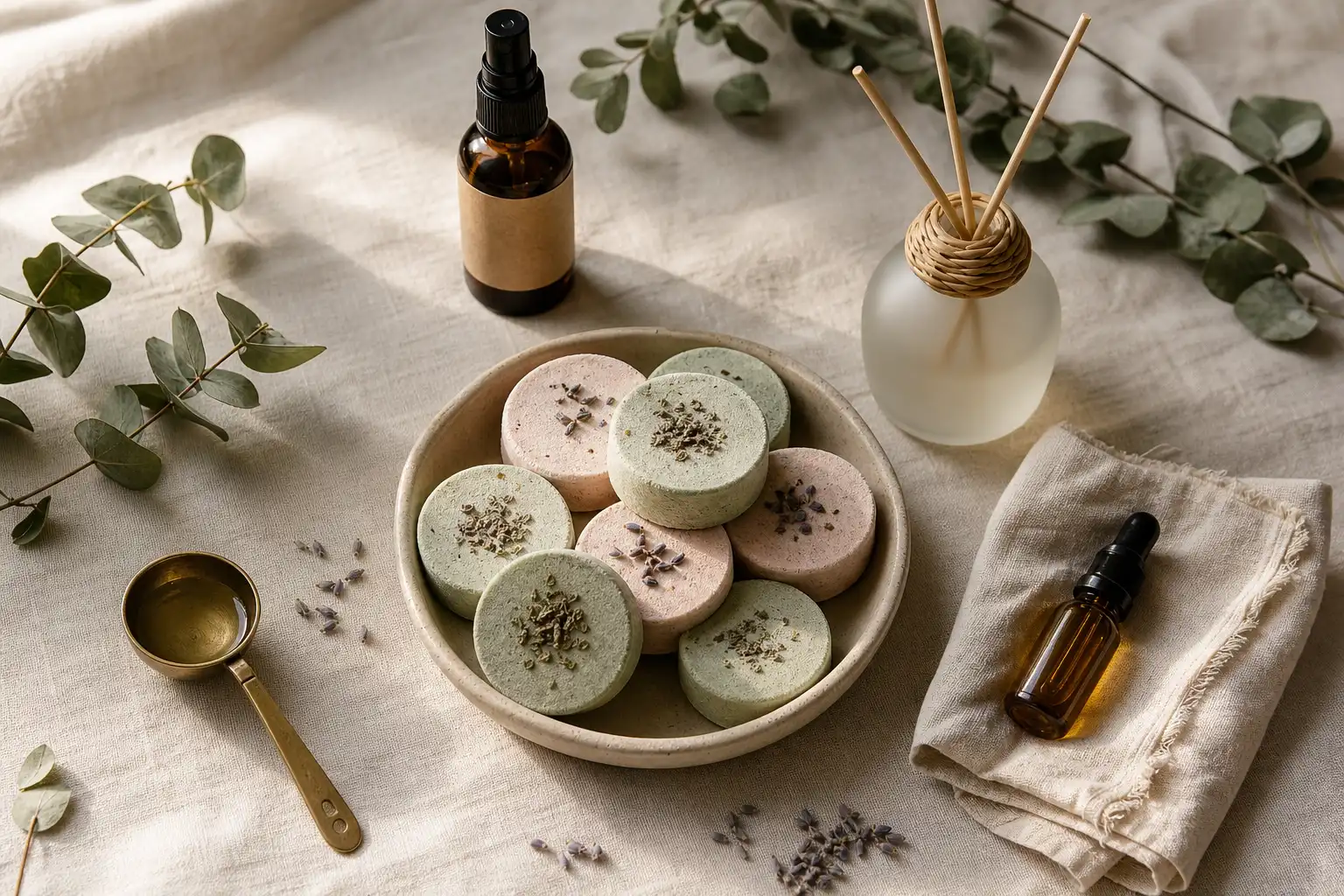
Not every shower needs to be a full aromatherapy event. On mornings when I just want a hint of scent, I'll run a passive reed diffuser in the bathroom and skip the steamer entirely. Stretching your supply this way easily doubles how long a batch lasts.
DIY Refresh Spray for Older Steamers
Mix 2 tablespoons of witch hazel with 15–20 drops of essential oil in a small spray bottle. One light mist on a fading steamer about a minute before use brings it right back to life. Don't soak it — a single spritz is plenty.
FAQ
Q: Can I freeze shower steamers to make them last longer?
A: I don't recommend it. While freezing does slow oil evaporation, condensation forms on the steamer as it thaws — and that surface moisture is enough to trigger the fizz reaction. You'll end up with a partially spent, soggy tablet. Cool, dry, airtight room-temperature storage beats freezing every time.
Q: How can I tell if my shower steamer is still good?
A: Quick sensory check: it should smell distinct (not faint or rancid), feel firm and dry (not soft or tacky), and look uniform in color (no yellow spots or weeping). If it passes all four, it's still good — even if the scent has mellowed, you can refresh it with a drop of oil.
Q: Why did my shower steamer dissolve in 30 seconds?
A: Placement, almost always. You put it directly under the water stream. Move it to the corner of the shower floor where only mist and occasional splashes reach it. You can also place it on a soap dish or in a mesh bag to slow water contact even further.
Q: Are essential oils or fragrance oils better for longevity?
A: Honestly? Fragrance oils often retain scent longer in storage because they're formulated for stability. But essential oils deliver true aromatherapy benefits and a cleaner aromatic experience. As a maker, I prefer essential oils for performance and refresh them as needed — the trade-off is worth it.
Q: Can I make one shower steamer last for several showers?
A: Absolutely — and this is the single best way to stretch your supply. Cut each steamer into halves or quarters, store the unused portions airtight, and place each piece on the splash zone rather than under direct water. One tablet can comfortably last three to four showers this way.
Q: Do shower steamers expire?
A: Technically, no — they won't grow mold or become unsafe like food does. What happens is they lose efficacy. The essential oils evaporate, the fizz reaction weakens, and eventually you're left with a scented chalk tablet that doesn't do much. "Expired" in this context just means "not worth using anymore." Store them well, and that day comes much, much later.