
A friendly walkthrough for anyone who wears a night guard, retainer, or sports mouthpiece and wants to keep it fresh, clear, and germ-free.
Why Cleaning Your Mouth Guard Matters
If you wear a mouth guard, retainer, or sports mouthpiece, you already know it spends hours inside your mouth soaking up saliva, food particles, and bacteria. A quick rinse under the tap might feel like enough, but it barely scratches the surface of what's actually clinging to that plastic.
Think of your mouth guard like a dish left in the sink overnight — water alone won't cut through the grime. That's where a proper cleaning routine (and a good cleaning tablet) comes in.
The Hidden Buildup on Your Night Guard
Within days, a thin layer of biofilm starts forming on any oral appliance. Left unchecked, it turns into tartar, causes yellowing, and creates that unmistakable "old plastic" smell.
If your guard looks cloudy, feels slimy, or has a strange odor when you pop it in at night, those are all warning signs that bacteria have set up camp.
Health Risks of a Dirty Mouthpiece
A neglected mouth guard isn't just gross — it can actually cause problems. Dental hygiene experts link dirty appliances to gum irritation, persistent bad breath, and oral thrush (a yeast infection in the mouth).
Some studies have even suggested a connection between contaminated oral appliances and respiratory issues, since bacteria can travel from your mouth into your airways. Keeping things clean is a genuinely simple health upgrade.
What Exactly Are Mouth Guard Cleaning Tablets?
Mouth guard cleaning tablets are small, dissolvable pucks you drop into water to create a fizzing solution that disinfects, deodorizes, and brightens your appliance. They're designed specifically for plastic dental gear — unlike toothpaste, which is too abrasive, or dish soap, which leaves behind residue.
How Effervescent Tablets Work
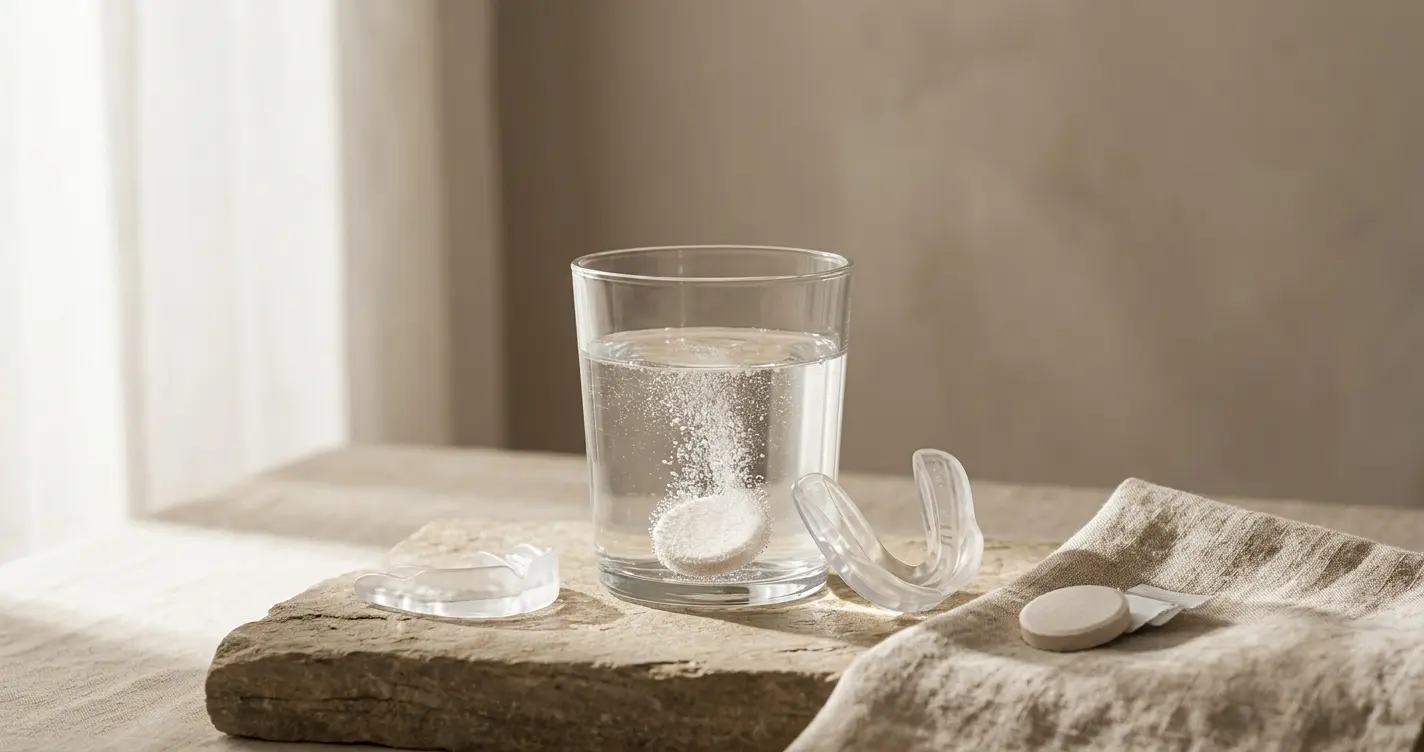
The magic is in the fizz. When the tablet hits water, it releases oxygen bubbles that physically lift debris off every surface — even the tiny grooves your toothbrush can't reach.
At the same time, active ingredients kill bacteria and break down staining compounds. It's basically a hands-off deep clean.
Common Ingredients to Look For
Sodium bicarbonate: gentle deodorizer and mild abrasive
Citric acid: triggers the fizz and helps dissolve mineral buildup
Persulfates: powerful stain removers and disinfectants
Enzymes: break down protein-based gunk (like saliva residue)
Are Denture Cleaner Effervescent Tablets the Same Thing?
Sort of. Many denture cleaner effervescent tablets have very similar formulas and can double as retainer cleaning tablets in a pinch. However, some contain stronger bleaching agents that can be too harsh for soft or clear plastic guards.
If you're unsure, look for a product specifically labeled for retainers, night guards, or orthodontic appliances.
Before You Start: What You'll Need
Supplies Checklist
Your mouth guard, retainer, or orthodontic appliance
One cleaning tablet
A clean glass or dedicated soaking cup
Warm (not hot) water
A soft-bristled toothbrush
Choosing the Right Water Temperature
This one's important: never use boiling or very hot water. Heat can warp the plastic, ruin the custom fit, and turn a $400 night guard into an expensive paperweight.
Aim for lukewarm water — comfortable to the touch, similar to what you'd use to wash your face.
How to Use Mouth Guard Cleaning Tablets: Step-by-Step
Step 1: Rinse Your Mouth Guard First
Hold your appliance under cool running water and gently rub off any loose saliva or debris with your fingers. This preps the surface so the tablet can do its job.
Step 2: Fill a Cup with Warm Water
Use just enough water to fully submerge the guard — usually about half a cup to a full cup. A dedicated soaking cup (not the one you drink from) is ideal.
Step 3: Drop in the Tablet
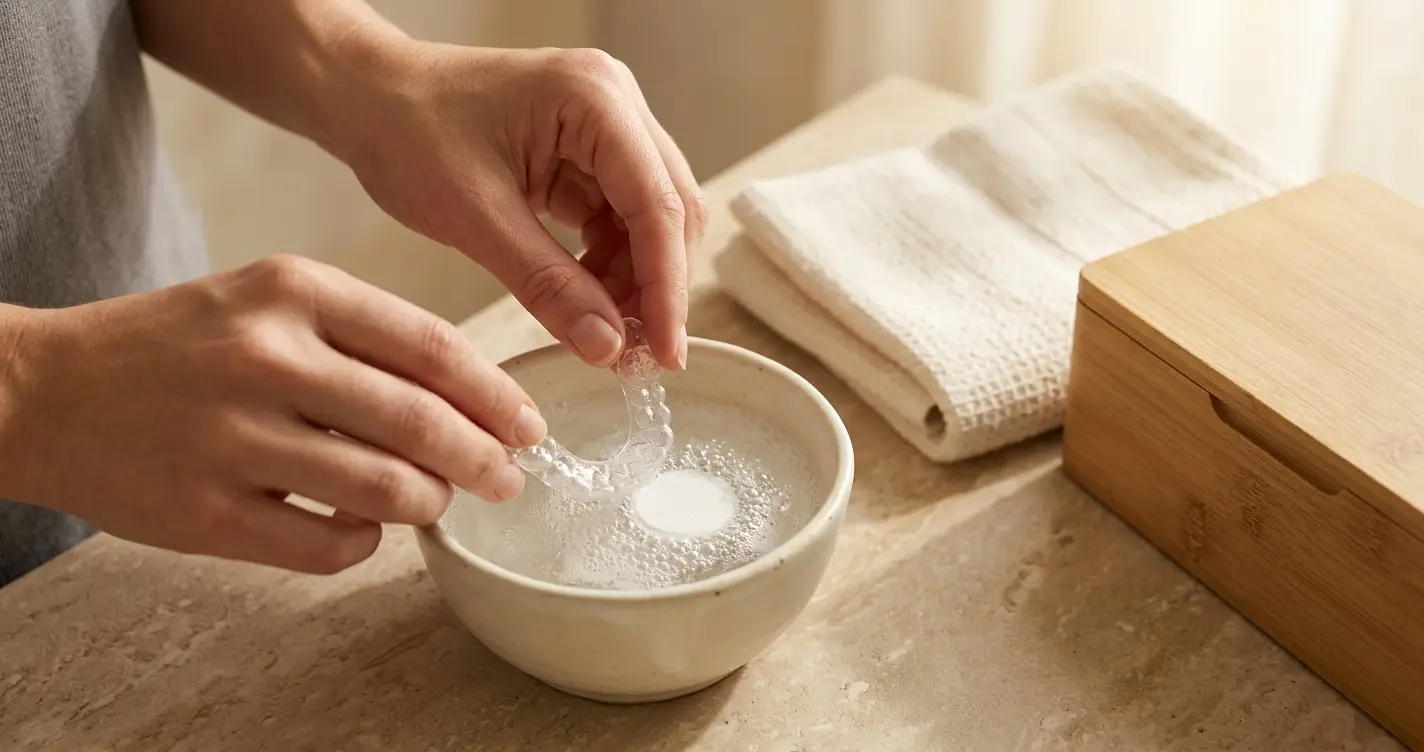
Place your mouth guard in the water, then drop in one tablet. You'll see it start fizzing immediately — that's the cleaning action kicking in.
Step 4: Soak for the Recommended Time
Most brands suggest 10 to 15 minutes. Resist the urge to leave it soaking all night — longer isn't better, and extended exposure can actually degrade certain materials over time.
Step 5: Gently Brush the Guard
After soaking, take out your guard and give it a light scrub with a soft-bristled toothbrush. Skip the toothpaste — its abrasives will scratch the plastic and create more places for bacteria to hide.
Step 6: Rinse Thoroughly
Hold the guard under cool water for at least 30 seconds. You want every trace of the cleaning solution gone before you put it back in your mouth. Residue can taste bitter and irritate your gums.
Step 7: Dry and Store Properly
Let the guard air-dry on a clean towel, then tuck it into a ventilated storage case. Sealing a wet appliance in a closed case is basically an invitation for bacteria to move back in.
How Often Should You Use Cleaning Tablets?
Daily vs. Weekly Cleaning Routines
For most people, a quick rinse and brush every morning works fine as daily maintenance. Then, use a cleaning tablet 2 to 3 times a week for a deeper soak.
If you wear your guard 24/7 (like some orthodontic patients), you may want to bump that up to daily tablet use — just check your manufacturer's guidance first.
Signs Your Guard Needs an Immediate Deep Clean
Visible cloudiness or a milky film
White or yellow spots
A sour, musty, or "off" smell
A chalky feel when you touch it
Special Cases and Different Appliance Types
Night Guards and Bruxism Splints
Hard acrylic night guards are generally the most durable and handle cleaning tablets very well. Follow the standard steps above without worry.
Clear Retainers (Invisalign-Style Trays)
Thin, clear aligners are more delicate. Some manufacturers (Invisalign included) actually recommend their own branded orthodontic appliance cleaner over generic tablets to preserve clarity.
If you use standard tablets, stick to shorter soak times — around 5 to 10 minutes — and always in lukewarm water.
Sports Mouth Guards
Boil-and-bite athletic mouthpieces are softer and more heat-sensitive. Use cooler water, shorter soak times, and consider a night guard disinfectant solution spray for quick post-practice freshening.
Full or Partial Dentures
The same tablets often work for dentures, but partials with metal clasps need extra care — long soaks can dull or corrode the metal. Always follow the specific dental mouthpiece cleaning instructions that came with your appliance.
Common Mistakes to Avoid
Using Hot Water
We can't stress this enough — heat warps plastic. A single accidental hot rinse can ruin your custom fit for good.
Soaking Too Long
Leaving your guard in a tablet solution overnight can weaken the plastic and discolor any metal components. Stick to the recommended time.
Skipping the Final Rinse
Chemical residue tastes terrible and can irritate sensitive gums. A thorough 30-second rinse takes almost no effort and saves you real discomfort.
Storing While Wet
A damp, sealed case is essentially a bacteria greenhouse. Always let your guard fully air-dry before storing.
Alternatives and Complements to Cleaning Tablets
Night Guard Disinfectant Solution Sprays
Sprays are perfect for a mid-week refresh or a quick clean when you're traveling. They don't replace a good soak, but they're a handy backup.
Homemade Alternatives (With Caution)
Some people swear by diluted white vinegar or a 3% hydrogen peroxide solution for occasional cleaning. These can work, but they're not universally safe for every material — check with your dentist before making them a habit.
When to Ask Your Dentist for a Professional Cleaning
Once a year, ask your dentist about an ultrasonic cleaning during your routine checkup. It removes stubborn tartar that home methods just can't touch.
How to Choose the Best Cleaning Tablets
Look for ADA Acceptance or Dentist Recommendations
The American Dental Association (ADA) Seal of Acceptance is a strong trust signal. Recommendations from your own dentist matter even more — they know your specific appliance.
Consider Fragrance and Sensitivity
If you have sensitive gums or fragrance allergies, look for unscented or hypoallergenic options. Mint is popular but not for everyone.
Value vs. Cost Per Tablet
Don't just look at box price — divide by the tablet count to get cost per use. A "cheap" 30-count box may actually cost more per tablet than a bulk 120-count from a trusted brand.
Final Takeaways for a Fresher, Longer-Lasting Mouth Guard
Keeping your mouth guard clean isn't complicated — it just needs to become a habit. Rinse, soak, brush, dry. Four small steps that protect your oral health and your investment.
With a good cleaning tablet and about 15 minutes a few times a week, your mouthpiece will stay clear, comfortable, and odor-free for months (or even years) to come. Your mouth will thank you every time you slip it in.
FAQ: Mouth Guard Cleaning Tablets
Q: Can I use denture tablets to clean my night guard?
A: Usually yes, especially for hard acrylic guards. But for soft, clear, or Invisalign-style trays, it's safer to use a tablet formulated specifically for retainers or orthodontic appliances to avoid clouding or damage.
Q: How long should I soak my mouth guard?
A: Most cleaning tablets work within 10 to 15 minutes. Over-soaking can weaken plastic and dull metal parts, so set a timer rather than leaving it in "just to be safe."
Q: Will cleaning tablets whiten a yellowed guard?
A: They'll significantly reduce surface staining and brighten your guard, but they can't reverse deep discoloration from years of use. If yours has permanent yellow patches, it's probably time to replace it.
Q: Are these tablets safe to swallow accidentally?
A: Small residual amounts on a properly rinsed guard are not dangerous, but the tablets themselves are toxic if ingested. Always rinse thoroughly, and store tablets well out of reach of children and pets.
Q: Can I use them every day?
A: For most hard night guards and standard retainers, daily use is fine if the manufacturer allows it. For softer or clearer trays, alternating with plain brushing may extend the life of your appliance.
Q: What if my guard still smells after cleaning?
A: Try a longer (but not overnight) soak, and make sure you're brushing all the crevices. If the smell persists, the biofilm may be permanently embedded in the plastic — that's your cue to get a replacement.
Q: How long does a mouth guard usually last with proper care?
A: A custom night guard typically lasts 3 to 5 years, retainers can last 5+ years, and sports mouthpieces usually need replacing every season or two. Regular cleaning genuinely extends their lifespan.