
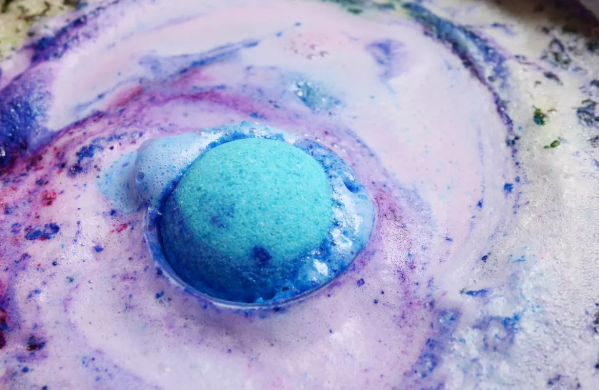
You've probably done it a dozen times. Unwrapped a colorful sphere, dropped it into warm bathwater, and watched it erupt into a swirl of color and fizz. It's satisfying in a way that's hard to explain. Almost meditative, honestly.
But have you ever stopped mid-soak and wondered what's actually going on in there? Like, chemically?
Turns out, that little ball of compressed powder is a surprisingly elegant piece of chemistry. And once you understand the science behind it, you might appreciate your next bath a whole lot more.
The Core Reaction
At the heart of every effervescent bath fizzy is a simple acid-base reaction. Two ingredients do most of the heavy lifting:
- Baking soda (sodium bicarbonate)
- Citric acid
That's it. That's the engine.
When these two dry powders meet water, they dissolve and react with each other. The citric acid baking soda reaction produces carbon dioxide gas — those satisfying bubbles racing to the surface. It also produces sodium citrate and water as byproducts, both completely harmless.
Here's a rough way to think about it: the citric acid donates a hydrogen ion, the baking soda accepts it, and in the molecular reshuffling that follows, CO₂ gets released. It's the same basic principle behind a baking soda volcano at a science fair, just… significantly more relaxing.
Why Does It Fizz So Aggressively?
The speed of the reaction depends on a few things. Water temperature matters a lot. Hot water accelerates the dissolution of both ingredients, which means faster fizzing. Drop a bath bomb into lukewarm water and it'll take its time. Toss one into a steaming hot bath and it practically detonates.
Surface area plays a role too. A tightly packed, dense bath bomb fizzes more slowly than a loosely compressed one because water can't penetrate as quickly. Manufacturers actually tweak compression levels to control how long the show lasts. Some brands aim for a quick 2-minute burst. Others engineer a slow, 8-minute dissolve. It's deliberate — and it's one of those details most people never think about.
Beyond the Fizz: What Else Is Packed in There?
The sodium bicarbonate and citric acid are the stars, but a bath bomb is more than two ingredients. Most contain a supporting cast that turns a simple chemical reaction into a full sensory experience.
Colorants and Dyes
Those Instagram-worthy swirls of purple, pink, and teal? Usually achieved with water-soluble dyes or micas. Micas are mineral-based pigments that create a shimmery, almost metallic effect on the water's surface. They're generally considered skin-safe, though people with sensitive skin sometimes react to synthetic dyes. Worth checking the label if that's you.
Essential Oils and Fragrance
This is where bath bombs cross into aromatherapy bath ingredients territory. Lavender, eucalyptus, peppermint, chamomile — the essential oils mixed into the powder get released as the bomb dissolves, filling your bathroom with scent.
There's actual science backing up why this feels so good. When you inhale essential oil molecules, they interact with olfactory receptors in your nose, which send signals to the limbic system — the part of your brain involved in emotion, memory, and stress response. Lavender, for instance, has been studied fairly extensively. Research published in the Journal of Alternative and Complementary Medicine found moderate evidence that lavender aromatherapy can reduce self-reported anxiety levels.
Is a bath bomb a medical treatment? Obviously not. But the mechanism is real, and the relaxation isn't purely placebo. The essential oils skin care connection is more legitimate than a lot of people assume.
Carrier Oils and Butters
Many sodium bicarbonate bath products also include coconut oil, shea butter, sweet almond oil, or similar moisturizing agents. These don't participate in the fizzing reaction — they're there for your skin. As the bomb dissolves, these oils disperse into the bathwater and create a thin emollient layer.
This is actually one area where bath bombs have a genuine skincare function. Soaking in plain water can strip natural oils from your skin, especially hot water. The added oils help counteract that drying effect. It won't replace a proper moisturizer, but it's a meaningful step up from a plain bath.
Other Additives You Might Find
- Epsom salts (magnesium sulfate) — commonly added for muscle relaxation, though the evidence for transdermal magnesium absorption is still debated among researchers
- Cornstarch — acts as a filler and also softens water, giving it that silky feeling
- Kaolin clay — sometimes added for a smooth texture and gentle skin-soothing properties
- Dried botanicals — rose petals, lavender buds, calendula. Mostly aesthetic, but they look beautiful floating around you
The Part Nobody Talks About: Are Bath Bombs Actually Safe?
Mostly, yes. But "mostly" is doing some work in that sentence.
Skin Sensitivity
The biggest concern for most people is irritation. Fragrance oils — synthetic or natural — dyes, and even citric acid itself can irritate sensitive skin. If you've ever gotten out of a bath bomb soak with itchy or red skin, the culprit is likely one of these ingredients.
People prone to yeast infections or UTIs should also exercise some caution. The dyes and fragrances can disrupt the delicate pH balance in sensitive areas. Dermatologists generally recommend rinsing off with clean water after a bath bomb soak. It's good advice that rarely makes it onto packaging, unfortunately.
What About "Natural" or "Organic" Claims?
Here's a reality check: the bath bomb market is largely unregulated when it comes to marketing language. Terms like "all-natural" and "organic" don't carry the same legal weight they do in food labeling. A product can be labeled "natural" while still containing synthetic fragrances or dyes. I've seen it plenty of times.
If ingredient transparency matters to you, look for brands that list every ingredient — not just the highlights — and source from suppliers with third-party testing. The good news is that growing consumer awareness has pushed a lot of brands toward better transparency in recent years.
Environmental Considerations
Glitter is the elephant in the bathroom. Traditional craft glitter is microplastic — tiny fragments of polyethylene or PET that wash down the drain and eventually end up in waterways. Many bath bomb brands have shifted to biodegradable glitter alternatives made from cellulose or mica, but not all of them. If this matters to you, check before you buy.
The dyes eventually enter the water system too. In small quantities from occasional use, the environmental impact is minimal. But it's worth being aware of, especially if you're someone who takes bath bomb baths multiple times a week.
Why Do Bath Bombs Feel So Good? The Psychology Piece
We've covered the chemistry. But honestly, a lot of what makes bath bombs appealing isn't purely chemical — it's psychological.
There's a concept in psychology called ritual behavior — the idea that structured, repetitive actions can reduce anxiety and increase feelings of control. Unwrapping a bath bomb, watching it fizz, smelling the fragrance shift as it dissolves… that's a micro-ritual. And our brains respond to rituals in measurable ways.
The multisensory stimulation matters too. You're simultaneously engaging sight (colors swirling through water), smell (essential oils and fragrance), touch (warm water, oils coating your skin), and hearing (that gentle crackling fizz). That kind of layered sensory input can pull your attention into the present moment — which is, functionally, what mindfulness practice tries to achieve.
Nobody's arguing that a $6 bath bomb is equivalent to therapy. But the mechanism through which it relaxes you isn't trivial, either. Your brain is doing real work to process all that input, and the result is genuine stress reduction for many people. I think that's worth acknowledging.
How to Get the Most Out of Your Bath Bomb
A few practical tips, since we're here:
- Water temperature matters. Warm, not scalding — around 37-38°C (about 98-100°F) — gives you the best balance of fizzing speed and skin comfort.
- Drop it in after the tub is full. You want the oils and colors to disperse evenly, not get blasted apart by running water.
- Don't soak for more than 20-30 minutes. Prolonged soaking, especially in hot water, can actually dry out your skin despite the added oils.
- Rinse afterward. A quick shower rinse removes dye residue and any potential irritants from sensitive areas. Takes 30 seconds and it's worth it.
- Store them dry. Humidity is the enemy. Even ambient bathroom moisture can trigger a slow reaction that degrades your bath bomb before you ever use it. Keep them in a cool, dry spot — a bedroom closet works better than a bathroom shelf.
FAQ
What makes a bath bomb fizz?
The fizzing comes from an acid-base reaction between citric acid and sodium bicarbonate (baking soda). When water is added, these two ingredients react to produce carbon dioxide gas, which forms the bubbles you see rising to the surface. It's the same type of reaction that makes vinegar and baking soda foam up — just formulated to be skin-safe and pleasant.
Are bath bombs bad for your skin?
For most people, no. However, certain dyes, fragrances, and preservatives can irritate sensitive skin. If you have eczema, allergies, or reactive skin, look for fragrance-free options or do a patch test first. Rinsing off after your soak also helps minimize any potential irritation.
Can bath bombs cause yeast infections or UTIs?
They can contribute to them in some individuals. The fragrances and dyes may disrupt natural pH levels in sensitive areas. This doesn't mean everyone will have a problem, but if you're prone to these issues, rinsing off with plain water after your bath is a simple and effective precaution.
Are bath bombs safe for kids?
Generally yes, but choose options without strong fragrances, synthetic dyes, or potent essential oils that may be too harsh for young skin. Some brands make bath bombs specifically formulated for children with gentler ingredients. And of course, always supervise small children during bath time.
Do bath bombs expire?
They don't spoil in a dangerous way, but they do lose potency over time. Old bath bombs fizz less vigorously because some of the citric acid and baking soda have already reacted with ambient moisture. For the best experience, use them within 6 to 12 months of purchase and store them somewhere dry.
Is the glitter in bath bombs safe for plumbing?
The glitter itself typically won't clog your pipes, but traditional plastic glitter contributes to microplastic pollution in waterways. If environmental impact is a concern for you — and it probably should be — opt for brands that use biodegradable glitter made from plant cellulose instead of conventional polyester or PET-based glitter.