
Why I Decided to Write This
I've been in the personal care industry for just over 20+ years now. In that time, I've formulated, sourced, audited factories, and walked the floors of more trade shows than I can count. And yet, the same question keeps landing in my inbox — from old friends, from hotel procurement managers, from the mom next door: "Which bath bomb should I actually buy?"
So here's the honest guide I wish existed when I started out. No marketing fluff. No paid placements. Just what I'd tell you over coffee if you asked.
First, Let's Talk About What a Bath Bomb Actually Is
The Basic Chemistry Behind the Fizz
At its core, a bath bomb is baking soda meeting citric acid in water. That reaction releases CO₂, and that's your fizz. Simple enough on paper.
But here's what most people don't realize — particle size, the binders used, and how tightly the bomb is pressed are why one bomb fizzes out in 30 seconds and another keeps going for nearly four minutes. The good ones aren't an accident. They're engineered.
What Separates a Budget Bomb from a Premium One
Since the clean beauty wave really hit its stride around 2023, the gap between cheap and premium has grown wider, not narrower. A budget bomb today is still mostly filler, synthetic dye, and a splash of fragrance oil. A premium bomb, when it's done right, is closer to a skincare product than a novelty item — carrier oils, real botanicals, and salts that actually do something for your skin.
Is the premium one always worth it? No. But there's a real reason for the quality gap, and it's not just packaging.
Reading the Ingredient List Without a Chemistry Degree
The "Good" List — Ingredients I Personally Look For
When I flip over a bath bomb, here's what makes me happy to see: sweet almond oil, jojoba, unrefined coconut oil. Epsom or Dead Sea salt — and yes, there's a real difference. Dead Sea salt has roughly ten times the magnesium content, which matters if you're soaking for muscle recovery. For color, mica, kaolin or French green clay, and botanical powders like beetroot or spirulina.
The "Be Careful" List
Synthetic FD&C dyes are the first red flag. They stain tubs, sometimes stain skin, and they don't add anything. SLS and SLSA as foam boosters — I'm picky here. They make for an impressive bubble show but can strip the skin barrier, especially if you bathe often.
And then there's "fragrance" or "parfum" listed without specifics. That single word can legally hide dozens of compounds. I'm not saying it's all bad. I'm saying you deserve to know.
Sample Ingredient Comparison Table
| Ingredient Type | Budget Bath Bomb | Mid-Tier | Premium / Natural |
|---|---|---|---|
| Base | Baking soda + citric acid | Same + cornstarch | Same + kaolin clay |
| Moisturizer | Mineral oil | Coconut oil | Cold-pressed jojoba/shea |
| Color | FD&C dyes | Mica blends | Botanical powders, clays |
| Scent | Synthetic fragrance | Fragrance + EO blend | 100% essential oils |
Matching a Bath Bomb to Your Skin Type
Dry or Mature Skin
Look for shea butter, cocoa butter, argan oil. And honestly, skip the heavy citrus essential oils — they can be drying, and some are photosensitizing, which means a sunny walk the next day might leave you with patchy spots.
Oily or Acne-Prone Skin
Clay-based bombs are your best friend here. Kaolin or bentonite pull excess sebum without leaving you parched. Tea tree and eucalyptus add a clarifying edge without clogging pores.
Sensitive or Eczema-Prone Skin
This is where fragrance-free or very low-EO formulas earn their keep. And colloidal oatmeal — genuinely underrated. It's one of the few ingredients with real clinical backing for eczema relief, and most "sensitive skin" bath bombs don't include enough of it.
Combination Skin
Here's a small trick I share with my B2B clients who package amenity kits: rotate. One clay-based bomb mid-week, one butter-rich bomb on the weekend. Your skin doesn't need the same thing every day.
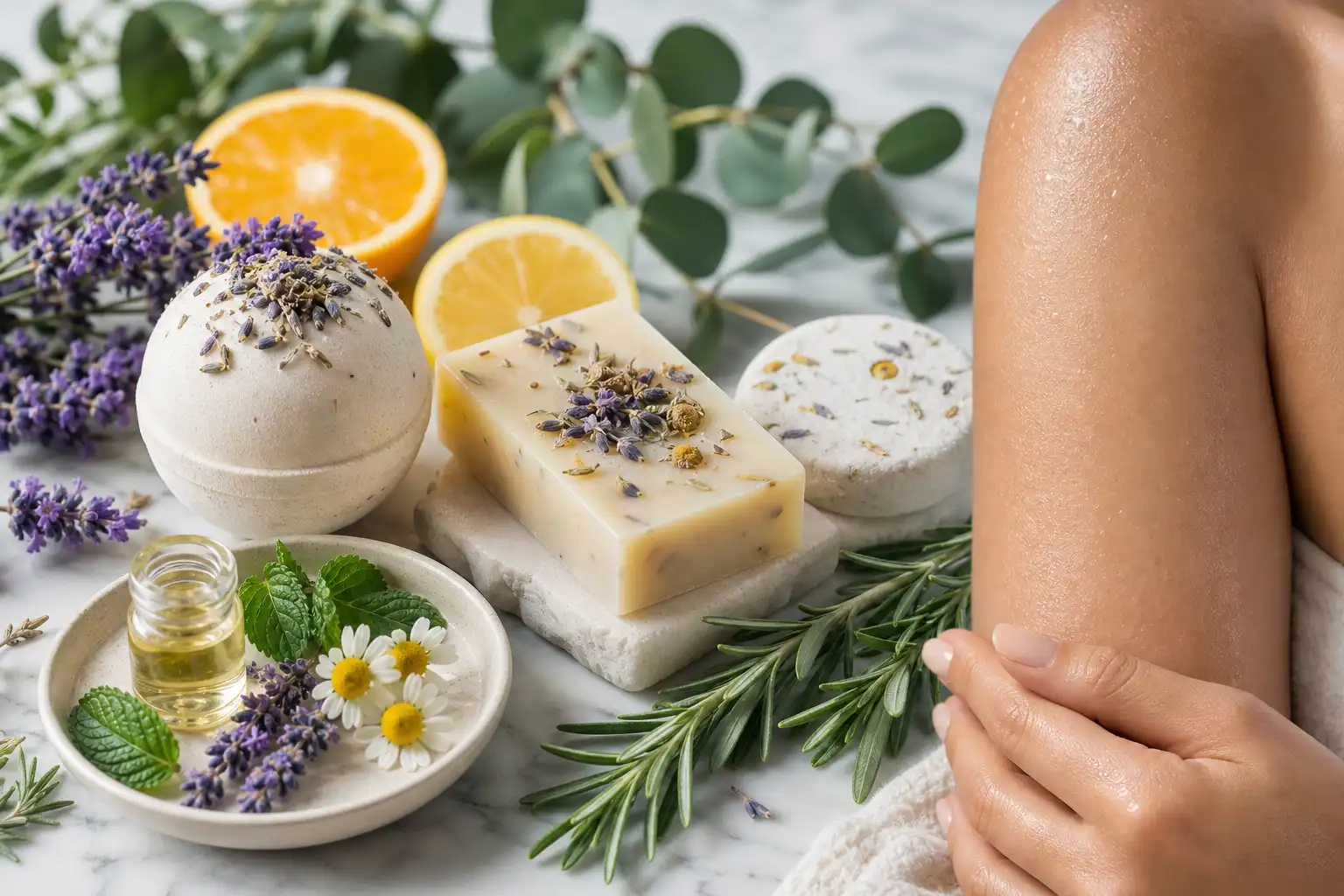
Scent Selection — Not Just About Smelling Nice
Matching Scent to Mood and Moment
Lavender and chamomile in the evening — your nervous system will thank you. Citrus, peppermint, or rosemary in the morning for that lift. Eucalyptus and camphor when you feel a cold coming on. Scent isn't decoration. It's function.
A Quick Word on Essential Oil Concentration
If a bath bomb smells like it hit you in the face from across the room, that's usually not a sign of quality. Real essential oils are concentrated, yes, but they bloom in warm water — they don't punch through the cardboard box. An aggressively perfumed bomb almost always means synthetic fragrance load, not therapeutic-grade EOs.
What Most Buying Guides Won't Tell You
Shelf Life, Packaging, and Pressing
Bath bombs have a real shelf life. After about 12 to 18 months, the citric acid starts to lose punch — that's why your two-year-old gift basket bomb barely fizzes. Shrink-wrapped or wax-paper-wrapped bombs hold up far better than those sitting loose in a basket on a humid shelf.
And pressing — hand-pressed bombs tend to outperform machine-pressed because the density is more even, the oils distribute better, and small-batch makers usually don't cut corners on ingredient ratios.
The 30-Second In-Store Test I Use Myself
Pick it up. Heft it in your palm. A good bath bomb feels denser than it looks. Then smell it — not the packaging, the bomb itself. If the scent is sharp and "perfumey" rather than warm and rounded, put it back. That quick check filters out maybe 80% of regrettable purchases.
A Simple Selection Framework You Can Use Today
- Identify your primary goal — relax, skincare, gift, or kids.
- Check the first five ingredients — that's where 90% of the formula lives.
- Smell-test if possible — your nose catches synthetic overload fast.
- Start small — try one before committing to a set.
Real Examples from My Own Bathroom Shelf
For my 8-year-old daughter, I keep a fragrance-free oatmeal-and-shea bomb. No essential oils, no dye, no surprises. For post-workout Sundays, it's a Dead Sea salt and eucalyptus bomb — the magnesium genuinely helps with muscle soreness, and the eucalyptus opens everything up.
And the one I consistently recommend to hotel buyers? A small, clay-based bomb with lavender and a touch of bergamot. Universal appeal, low allergen risk, doesn't stain tubs. Boring? Maybe. But it works for almost everyone, and that's what hospitality needs.
Final Thoughts From Someone Who's Seen the Industry Evolve
Through decades of experience, here's what I've learned: trust your skin, not the packaging. The prettiest bomb in the shop isn't always the one your body needs. The best bath bomb is, ultimately, the one you'll actually reach for on a Tuesday night when you're tired and just want twenty minutes of peace.
Try one. Listen to how your skin feels the next morning. That's the only review that matters.
FAQ
Q: Can I ask you directly for advice on how to choose the right bath bomb?
A: Absolutely. When choosing a bath bomb, consider your skin type, fragrance preference, and the kind of bathing experience you want. For example, moisturizing bath bombs are great for dry skin, while essential oil blends can help with relaxation or stress relief. If you're unsure which product is best for you, feel free to contact us — we’re happy to recommend the most suitable option based on your needs.
Q: Can Bath Bombs Cause UTIs or Irritation?
A: They can, especially for women prone to UTIs. Heavy fragrance, synthetic dyes, and high foam content are the usual culprits. If you've had recurring issues, stick to unscented or very mildly scented bombs with no dye.
Q: Do Natural Bath Bombs Really Work Better, or Is It Marketing?
A: Both, honestly. Some "natural" labels are pure marketing. But when the ingredient list backs it up — cold-pressed oils, real essential oils, mineral salts — your skin does feel the difference. The fizz might be slower, but the after-bath feel is in another league.
Q: How can I tell if a bath bomb is high quality?
A: It feels firm (not crumbly), fizzes slowly for 2–4 minutes, uses natural ingredients like baking soda and skin-safe oils, and leaves your skin soft with no tub stains.
Q: How Should I Store Bath Bombs to Keep Them Fresh?
A: Airtight, cool, dry. A sealed container in a linen closet beats the bathroom shelf every time — humidity kills the fizz. Use within 12 months for best performance.
Q: Can Kids Use the Same Bath Bombs as Adults?
A: I'd say no by default. Kids' skin is thinner and more reactive. Look for fragrance-free, dye-free, low-EO formulas designed for children. And avoid anything with strong menthol or eucalyptus for kids under six.