
You light a candle after a long day. The soft glow fills the room, lavender drifts through the air, and for a moment, everything feels calm. Then your phone buzzes — a friend forwarded an article claiming scented candles are "silently poisoning" your home.
Sound familiar? You're not alone. Every few months, alarming headlines about scented candle toxins circulate on social media, sparking genuine worry among millions of people who simply want to relax in their own living rooms.
Let's do something different today. Instead of recycling fear or dismissing your concern, we're going to walk through what credible research institutions — not clickbait blogs — actually say about candles and your health.
Why This Question Keeps Coming Up
The candle-cancer narrative follows a predictable viral cycle. A single preliminary study gets picked up by media outlets hungry for alarming headlines. The nuance disappears. "Trace chemicals detected" becomes "YOUR CANDLE IS GIVING YOU CANCER" in a Facebook share.
This pattern exploits a real psychological trigger: you associate candles with safety and comfort, so the idea that they might harm you feels like a betrayal. That emotional charge makes the claim spread faster than any correction ever could.
Here's what we're going to do — examine the actual chemistry, review the authoritative studies, put the risk in perspective alongside other indoor air pollutants, and then talk about why scented candles might actually be doing you more good than you realize.
What's Actually Inside a Scented Candle
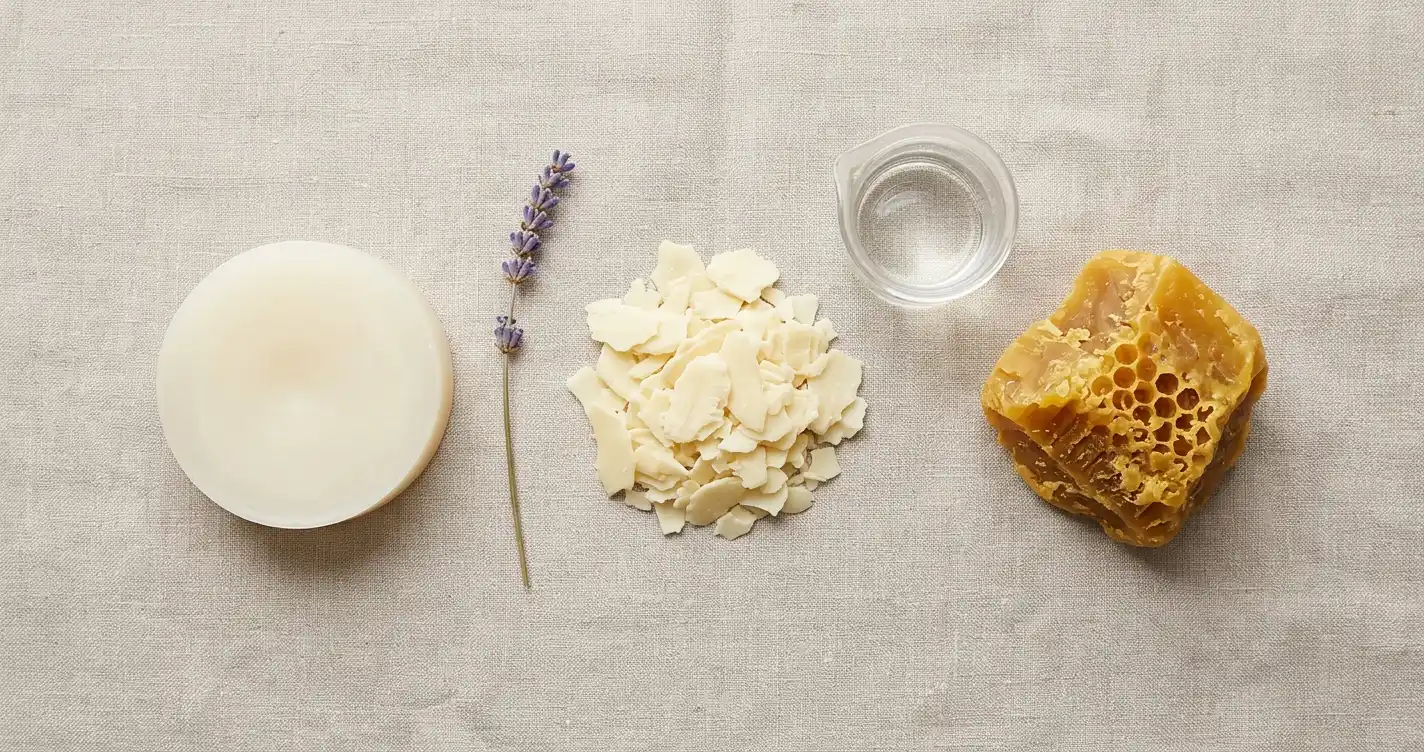
Wax Types — Paraffin, Soy, Beeswax, and Coconut
Most mass-produced candles use paraffin wax, which is derived from petroleum refining. This origin story sounds scary — but "derived from petroleum" isn't the same as "dangerous to burn." Mineral oil, petroleum jelly (Vaseline), and even some food-grade waxes share the same origin.
Paraffin undergoes extensive refining before it becomes candle wax. When burned, it produces carbon dioxide, water vapor, and trace amounts of other compounds — just like any organic material undergoing combustion.
Plant-based alternatives — soy, coconut, and beeswax — have slightly different burn profiles. Soy tends to produce less visible soot. Beeswax burns longest. Coconut wax offers excellent fragrance throw. But here's the key point: all organic combustion produces some byproducts. There is no zero-emission flame.
Fragrance Oils, Essential Oils, and Dyes
The scent in your candle comes from either synthetic fragrance oils, natural essential oils, or a blend of both. The International Fragrance Association (IFRA) sets strict safety standards governing which chemicals can be used in fragrance formulations and at what concentrations.
Fragrance load — the percentage of fragrance oil relative to wax — typically ranges from 6% to 12% in quality candles. Higher loads don't necessarily mean more danger, but they can affect burn quality.
One legitimate historical concern was lead-core wicks, which could release lead particles when burned. The United States banned lead wicks in 2003, and reputable manufacturers worldwide have followed suit. Modern candles use cotton, paper, or wood wicks.
What Happens When You Light the Wick — The Chemistry of Burning
When you light a candle, the heat melts the wax near the wick. Liquid wax travels up the wick through capillary action, vaporizes, and combusts in the flame. This produces primarily CO2 and water vapor, along with trace volatile organic compounds and fine soot particles.
This is normal combustion chemistry — the same process that occurs when you cook dinner on a gas stove, toast bread, or light a campfire. The question isn't whether byproducts exist. It's whether they exist in concentrations that could actually harm you.
What the Research Actually Shows — The Authoritative Evidence
The European Candle Association (ECA) & REACH Studies
The most comprehensive candle emissions research comes from Europe. A major study funded by the European Candle Association measured emissions from candles across over 2,000 burning hours under realistic household conditions — not sealed laboratory chambers.
The conclusion was clear: emissions from burning candles fell well below World Health Organization (WHO) indoor air quality thresholds. The levels of volatile organic compounds detected were not considered a significant health risk under normal use conditions.
These findings align with REACH (Registration, Evaluation, Authorisation and Restriction of Chemicals) — the EU's rigorous chemical safety framework that governs substances sold within Europe, including candle components.
The National Candle Association (NCA) Position
The NCA has compiled decades of independent research and maintains a straightforward position: no peer-reviewed study has established a direct link between standard candle use and cancer development in humans.
This distinction matters enormously. "We detected a chemical" is not the same as "that chemical is present at a concentration high enough, over a duration long enough, to cause disease." This is the dose-response principle — the foundation of modern toxicology.
South Carolina State University 2009 Study — The One Everyone Cites
If you've seen a candle-cancer claim online, it almost certainly traces back to a 2009 study from South Carolina State University. This is the study that launched a thousand panic-posts. So let's look at what actually happened.
The researchers burned candles in a small, sealed chamber with no ventilation and measured the resulting paraffin wax fumes. They detected elevated levels of certain chemicals including toluene and benzene — both known carcinogens at high concentrations.
Here's what the viral posts never mention:
The study was never published in a peer-reviewed journal — it was presented at a conference as preliminary findings
The testing conditions (sealed chamber, no ventilation) don't represent how anyone actually uses candles
Multiple scientists publicly criticized the methodology and conclusions
The concentrations detected, even under these extreme conditions, were still relatively low
The American Chemical Society, where the findings were presented, does not endorse individual presentations as established science. Yet this single unpublished study continues to fuel fear nearly two decades later.
What About Long-Term, Daily Exposure?
Let's be honest about a gap: no long-term epidemiological study has tracked "daily candle users" versus "non-users" over decades to compare cancer rates. Does this absence of evidence concern researchers?
Not particularly. Regulatory bodies like the European Chemicals Agency and the U.S. Consumer Product Safety Commission have reviewed available data and concluded that emission levels from normal candle use are too low to warrant large-scale epidemiological investigation. When exposure levels are well below established safety thresholds, funding bodies don't commission million-dollar longitudinal studies to prove a negative.
Putting Risk in Perspective — Context Matters
Candles vs. Other Household Emission Sources
Here's where the candle panic really falls apart — context. If scented candle toxins at trace levels concern you, consider what else is happening in your home:
Gas stove cooking: Produces nitrogen dioxide (NO2), formaldehyde, and particulate matter at levels that have prompted some researchers to compare exposure to secondhand smoke
Spray air fresheners: Release aerosolized VOCs directly into breathing space, often at higher concentrations than candle emissions
Incense burning: Produces significantly more particulate matter than candles — some studies show 2-4 times the emission levels
Traffic pollution: If you live near a busy road, the pollutants entering through your windows dwarf anything a candle produces
This isn't whataboutism — it's calibration. Understanding relative risk helps you make informed decisions rather than fear-driven ones.
Smart Candle Habits — Minimizing Any Residual Concern
Even though the evidence says candles are safe under normal conditions, there's no harm in optimizing your practice. Think of this as upgrading from "fine" to "excellent."
Choose Quality Over Bargain
Buy from brands that disclose their ingredients — transparency signals confidence
Prefer cotton or wood wicks over unknown wick materials
Consider soy, coconut, or beeswax blends if you want visibly less soot on your walls and ceilings
Look for compliance mentions (IFRA-certified fragrances, EU safety standards)
Burn Practices That Reduce Soot and Emissions
Trim your wick to 5-7mm before each lighting — this prevents oversized flames and candle soot
Avoid burning longer than 4 hours continuously
Keep candles away from drafts — uneven airflow causes incomplete combustion and more visible soot
Crack a window or ensure your room isn't completely sealed during longer burns
Who Should Take Extra Precautions
Some individuals may want to be more mindful — not because candles are uniquely dangerous, but because their respiratory systems are more reactive to any airborne particles:
People with diagnosed asthma or chronic respiratory conditions
Anyone living in spaces with extremely poor ventilation and no natural airflow
Individuals who already experience fragrance sensitivity
Note: this is general indoor air quality advice, applicable equally to cooking, cleaning products, and any source of combustion particles.
The Upside You're Missing — Why Scented Candles Are Worth Keeping
Documented Benefits for Stress and Mental Health
While the fear narrative dominates search results, there's a quieter body of research showing that aromatherapy — the deliberate use of scent for wellbeing — has measurable positive effects on the nervous system.
Scent molecules travel directly to the limbic system, the brain region governing emotion and memory. Research published in recent years has demonstrated that lavender reduces cortisol levels, chamomile promotes relaxation, and citrus scents can improve alertness and mood.
Beyond the biochemistry, there's the ritual itself. Lighting a candle signals to your brain that the day's work is done. It's a physical boundary between "productive time" and "rest time" — something our always-on, screen-saturated lives desperately need.
Ambiance, Intentional Living, and the Small Pleasures Argument
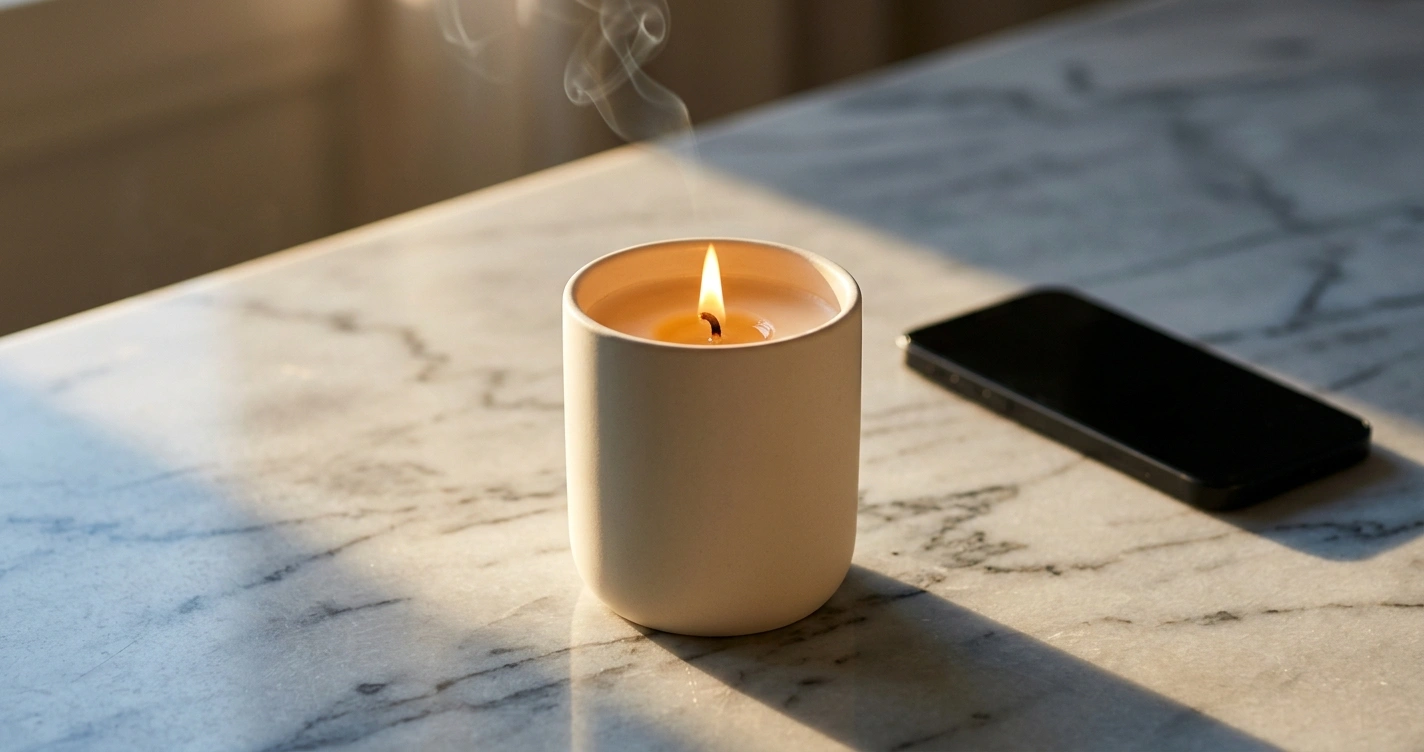
The Danish concept of hygge — creating warm, intentional environments — places candlelight at its center for good reason. Soft light reduces nervous system arousal. Scent anchors you in the present moment. The simple act of choosing a candle, lighting it mindfully, and sitting in its warmth encourages phone-free presence.
There's a mental health cost to eliminating every minor pleasure from your life based on theoretical risk. Anxiety about hypothetical dangers can cause more measurable harm than the trace emissions from an evening candle ever could.
A Balanced Recommendation
Based on evidence from European regulatory bodies, multiple independent research teams, and the absence of any peer-reviewed study linking normal candle use to cancer — you can continue enjoying scented candles without guilt.
Choose quality products, follow basic burn practices, ensure reasonable ventilation, and then do what you lit that candle to do in the first place: relax.
Frequently Asked Questions
Q: Are paraffin candles more dangerous than soy candles?
A: Both emit trace combustion byproducts at levels well below established safety thresholds. Soy wax produces slightly less visible soot, which some people prefer aesthetically. But neither type has been shown to pose a cancer risk under normal household use. Choose based on your scent and burn preferences, not fear.
Q: Can scented candles trigger allergies or asthma attacks?
A: Strong fragrances can irritate individuals with existing respiratory sensitivity, but this is an irritant response — fundamentally different from a carcinogenic one. If you're sensitive, opt for lightly scented or essential-oil-only candles, burn for shorter periods, and maintain good ventilation.
Q: Do candles release formaldehyde?
A: Trace amounts of formaldehyde can be detected from virtually any combustion source, including candles. However, the concentrations measured in controlled studies are far below hazardous levels — comparable to what's released when you toast bread or cook with a gas hob. Context and concentration matter.
Q: Is candle soot the same as diesel soot?
A: No, and this is one of the most misleading comparisons circulating online. While both are carbon-based particles from incomplete combustion, they differ in chemical composition, particle size distribution, and the quantities produced. Diesel exhaust contains complex carcinogenic compounds at industrial volumes. Candle soot is primarily elemental carbon in minimal amounts.
Q: How many hours a day is it safe to burn a scented candle?
A: No regulatory body has established a maximum safe burn time because normal domestic use doesn't approach harmful thresholds. As a best practice, burn for 1-4 hours at a time, allow the room to air between sessions, and trim the wick before relighting. This optimizes your candle's lifespan as much as it manages emissions.
Q: Should I stop burning candles if I'm pregnant?
A: No major health organization — including the NHS, the American College of Obstetricians and Gynecologists, or the WHO — advises against candle use during pregnancy. Standard precautions apply: use quality candles, maintain ventilation, and avoid any scent that triggers personal nausea or discomfort. If you have specific respiratory concerns, discuss them with your healthcare provider.