
If you wear dentures, you've probably dropped one of those fizzy tablets into a glass of water and watched it bubble away. But have you ever wondered what's actually happening beneath all that fizz? More importantly, is it really doing a better job than brushing, soap, or that vinegar trick your neighbor swears by?
Let's break down the science, compare the alternatives, and figure out why millions of people trust that little tablet to keep their smile fresh every single day.
Why Denture Hygiene Matters More Than You Think
Dentures sit in one of the most bacteria-rich environments in your body — your mouth. Every day, food particles, saliva proteins, and microorganisms form a sticky biofilm on denture surfaces. Left unchecked, this buildup leads to staining, bad breath, and potentially serious oral infections.
Research suggests a significant number of denture wearers don't clean their prosthetics thoroughly enough. Studies published in dental journals have found that poor oral prosthesis hygiene is linked to conditions like denture stomatitis — a painful fungal infection affecting up to 67% of denture wearers at some point.
The consequences go well beyond discomfort. Poor denture care can contribute to gum disease, aspiration pneumonia in elderly patients, and chronic bad breath that no amount of mouthwash can mask. Here's the uncomfortable truth: brushing alone simply isn't enough to reach the microscopic crevices and textured surfaces of modern dentures.
That's where a more comprehensive cleaning approach becomes essential.
The Science Behind Denture Cleaning Tablets
What's Inside the Tablet — Key Ingredients Breakdown
Denture cleaning tablets aren't just baking soda in a compressed form. They're carefully engineered formulations with multiple active ingredients, each assigned a specific job. Understanding the denture tablet ingredients helps explain why they work so well.
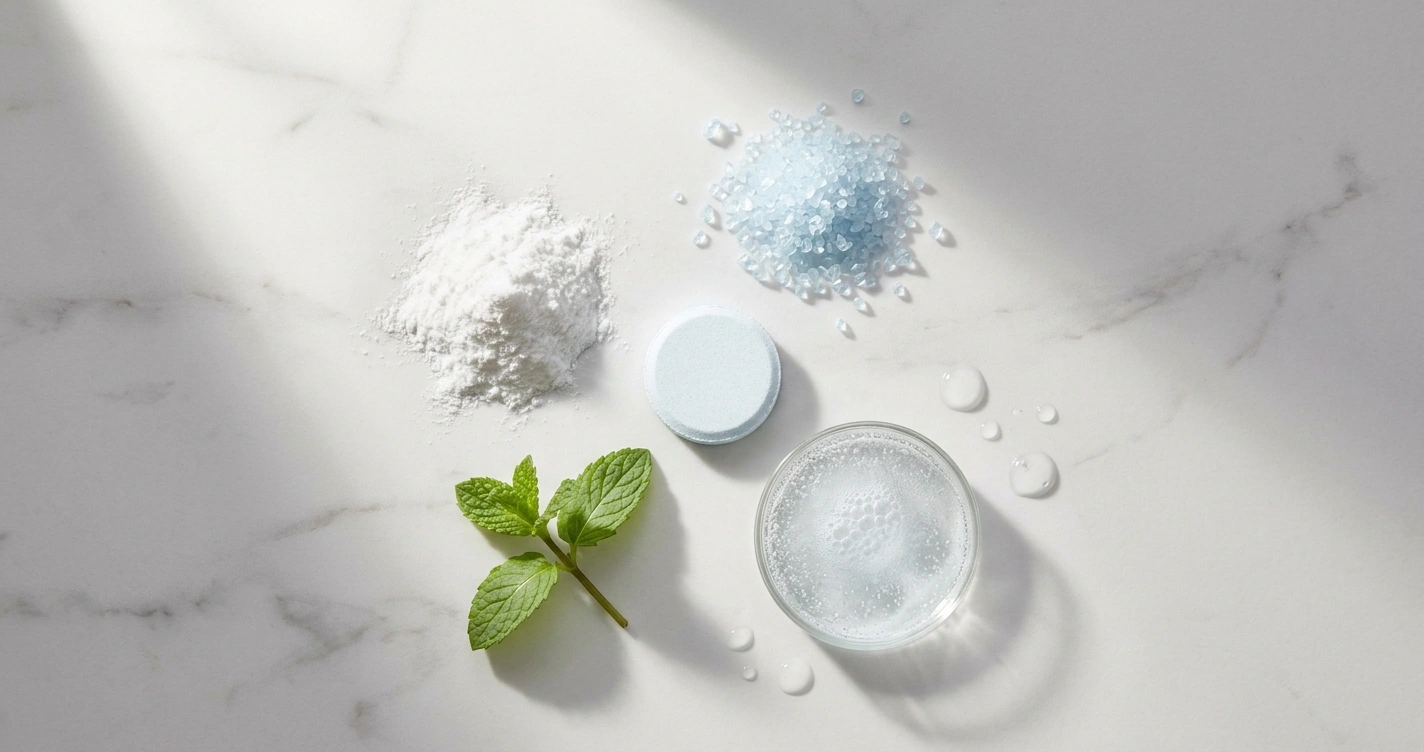
Sodium bicarbonate and citric acid are the effervescent pair. When they meet water, they react to produce carbon dioxide — those satisfying bubbles you see. The fizz isn't just for show, though. It creates mechanical agitation that helps loosen debris.
Sodium perborate or persulfate acts as an oxidizing bleach. These compounds release active oxygen, which breaks down the chemical bonds that give stains their color. Strong enough to tackle discoloration, yet gentle enough for denture materials.
Proteolytic enzymes target protein-based deposits. Since much of the biofilm on dentures consists of proteins from saliva and food, these enzymes literally digest the sticky layer holding bacteria in place.
Surfactants work like dish soap — they reduce surface tension so water can get underneath deposits and lift them away. Chelating agents round out the formula by dissolving mineral buildup and tartar that accumulates over time.
The Effervescent Cleaning Action — Step by Step
When you drop a tablet into water, here's what happens in sequence:
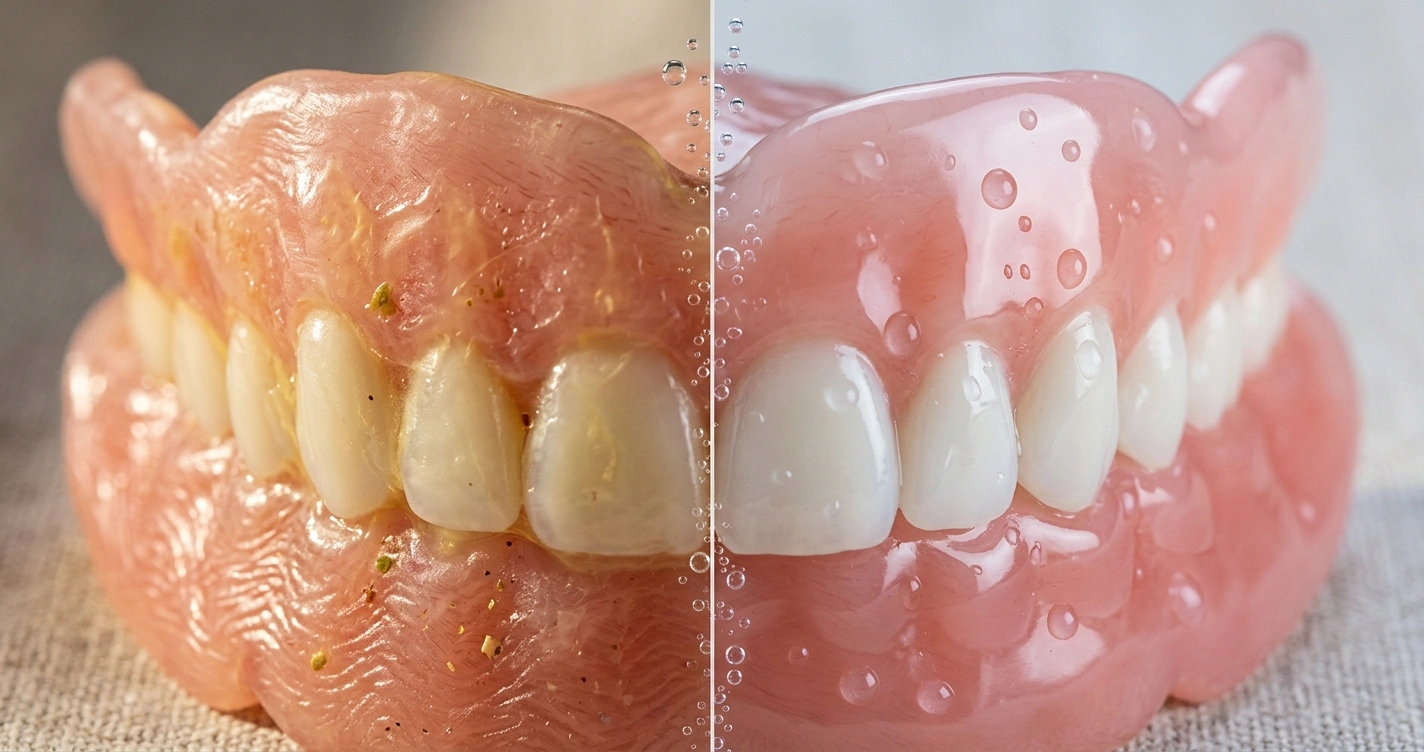
Step 1: The tablet dissolves rapidly, releasing millions of micro-bubbles through effervescent cleaning action. This isn't random fizzing — it's a controlled chemical reaction designed to maximize oxygen distribution throughout the solution.
Step 2: Those oxygen-rich bubbles penetrate into crevices, clasps, and textured surfaces that no toothbrush bristle could ever reach. The mechanical energy of the bubbles dislodges trapped particles.
Step 3: At the same time, enzymes and surfactants go to work loosening plaque, stains, and food particles from every surface. The surfactants ensure that once debris breaks free, it floats away rather than reattaching.
Step 4: The antibacterial soaking solution created by the dissolved tablet kills up to 99.9% of odor-causing bacteria. This disinfection step is what separates tablet cleaning from purely mechanical methods.
This multi-action approach — mechanical, chemical, enzymatic, and antibacterial forces working in concert — is why a single tablet outperforms any single cleaning method used alone.
What Happens to Stains During the Soak
Stains on dentures come from chromogens — colored molecules that bond to the denture surface. Tea, coffee, red wine, and tobacco each deposit different types of chromogens. They all share one vulnerability: their molecular bonds can be broken by oxidizing agents.
When active oxygen from the tablet contacts stain molecules, it breaks the conjugated double bonds that give them color. The stain literally becomes colorless at a molecular level. This is the same principle behind removing denture stains that professional dental cleanings use — just in a convenient at-home format.
Timing matters. A 3-to-5-minute soak takes care of daily surface stains and freshens things up. An overnight soak gives enzymes more time to break down stubborn protein deposits and lets oxidizing agents work longer on deep-set discoloration from years of coffee or tobacco use.
Comparing Denture Cleaning Methods — How Do Alternatives Stack Up?
Denture cleaning tablets aren't the only option out there. Let's take an honest look at the alternatives — where each method works well and where it falls short.
Brushing Alone
Brushing is quick and familiar. Most people already do it out of habit. But denture brushes can be abrasive over time, creating micro-scratches that actually harbor more bacteria. Brushing misses the tiny crevices in denture architecture and provides zero disinfection.
Soap and Water
Dish soap is cheap and always on hand. It does remove some surface debris. But it offers no antibacterial action against the specific organisms that colonize dentures. It can leave a slippery residue that affects fit, and it does essentially nothing for stains.
Vinegar or Baking Soda Soaks (DIY Methods)
Home remedies are appealing — natural, inexpensive, easy to try. The problem? Inconsistent concentration means unpredictable results. Vinegar's acidity can corrode metal clasps and damage certain denture materials over time. Baking soda alone provides some mild abrasive action but lacks enzyme activity and reliable antibacterial power.
Ultrasonic Cleaners
Ultrasonic devices use high-frequency vibrations to create cavitation bubbles that scrub surfaces. They are genuinely effective at mechanical cleaning. But they're expensive upfront, they still need a cleaning solution to disinfect, and they're not portable. You can't take one traveling.
Why Denture Cleaning Tablets Come Out Ahead
This is where the comparison becomes clear. Denture cleaning tablets combine chemical, enzymatic, and mechanical action in a single step. They're formulated at a safe pH for acrylic and metal denture materials — no guessing about concentration or acidity.
They're portable enough to toss in a travel bag, affordable at just pennies per use, and deliver consistent dosing every time. No risk of abrasion or material damage when used as directed. No other single method offers this combination of convenience, safety, and thorough cleaning power.
How to Use Denture Cleaning Tablets for Best Results
Getting the most from your denture tablets comes down to a few simple practices:
Water temperature: Use warm water, not hot. Hot water can warp denture materials over time. Warm water helps the tablet dissolve faster and activates enzymes more effectively.
Soaking duration: Follow the specific product instructions. Quick-clean formulas work in 3-5 minutes for daily maintenance. Overnight formulas use a slower-release design for deeper cleaning.
Rinse thoroughly: Always rinse your dentures under running water before putting them back in your mouth. This removes any residual cleaning agents.
Storage between uses: Keep dentures moist when not wearing them — dry storage can cause warping. A clean container with fresh water works fine between soakings.
Common mistakes to avoid: Don't reuse yesterday's soaking solution. Don't skip daily cleaning even if your dentures "look fine." And don't use tablets in anything other than the recommended container — your dentures need to be fully submerged for even cleaning.
Who Should Use Denture Cleaning Tablets?
While the name says "denture," these tablets serve a much wider audience than you might expect:
Full denture wearers — the primary audience, benefiting from daily deep cleaning
Partial denture users — clasps and metal frameworks especially benefit from non-abrasive cleaning
Retainer wearers — orthodontic retainers accumulate the same biofilm and benefit from effervescent action
Night-guard and mouthguard owners — sports guards and bruxism appliances need regular disinfection
People with limited hand dexterity — arthritis or mobility issues make brushing difficult; dropping a tablet in water is effortless
The expanding applications beyond traditional dentures speak to how effective and versatile this cleaning technology really is. If it's an oral appliance that sits in your mouth, a denture cleaning tablet can likely keep it fresh and hygienic.
Frequently Asked Questions
Q: Can denture cleaning tablets damage my dentures?
A: No, when used as directed. These tablets are formulated at safe pH levels for acrylic resin and metal components. Unlike DIY solutions with unpredictable acidity, commercial tablets undergo testing to confirm material compatibility. Just follow the recommended soaking time on the package.
Q: How often should I use denture cleaning tablets?
A: Most dental professionals recommend daily use for the best oral prosthesis hygiene. At a minimum, use a tablet every other day. Daily soaking stops biofilm from maturing into a harder-to-remove layer and keeps bacteria levels consistently low.
Q: Can I use denture tablets to clean retainers or mouthguards?
A: Yes. The same effervescent cleaning action that works on dentures is effective on most oral appliances made from similar materials. Retainers, night guards, sports mouthguards, and even aligners all benefit from regular tablet soaking.
Q: Are denture cleaning tablets safe if I accidentally swallow residue?
A: Trace amounts left after a thorough rinse are low-toxicity and unlikely to cause harm. That said, the solution is not meant for ingestion. Always rinse your dentures under running water for at least 15–20 seconds before reinserting them.
Q: Do denture tablets replace brushing entirely?
A: No. Best results come from combining gentle brushing with daily tablet soaking. Brushing removes larger food particles and surface deposits. The tablet handles microscopic bacteria, deep-crevice cleaning, and stain removal. Think of them as complementary steps in a complete routine.
Q: What's the difference between 3-minute and overnight formulas?
A: The difference comes down to concentration and enzyme release rate. Three-minute formulas deliver a faster, more concentrated burst of cleaning action for daily maintenance. Overnight formulas release active ingredients gradually, providing a deeper clean—particularly effective for heavy stain buildup or when dentures haven't been cleaned in a few days.